Research Results and
Recommendations for Download


Five online learning and webinar sessions were held on July 15 (Tue.), 18 (Fri.), 22 (Tue.), 24 (Thu.), and 30 (Wed.), 2025. During these sessions, participants attended lectures from invited professors, researchers, and other speakers on the impact of nuclear weapons, their risks, and their relevance to the civil society surrounding them, and then they exchanged views with each other.
○ Tuesday, July 15: The humanitarian consequences of nuclear weapons
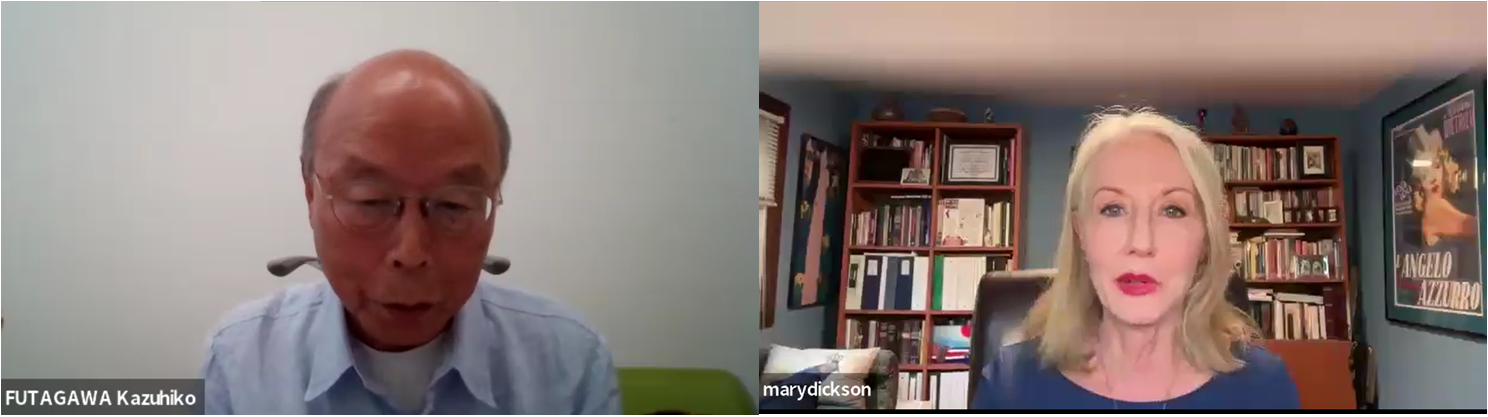 Photo on the left:Mr. Kazuhiko Futagawa Photo on the right:Ms. Mary Dickson
The first webinar welcomed and heard from Mr. Kazuhiko Futagawa (in-utero hibakusha from Hiroshima) and Ms. Mary Dickson (downwinder, thyroid cancer survivor, writer), who was exposed to radiation as a result of U.S. nuclear testing.
Mr. Futagawa, who was exposed to radiation while in his mother’s womb, spoke about losing family members as a result of the atomic bombing and about how his mother, although exposed to residual radiation, concealed her status as a hibakusha (atomic bomb survivor). He conveyed the following message to the participants: “If we do not stop war, war will end our lives. I hope that my story today will serve as an opportunity for you to once again recognize the absolute necessity of abolishing nuclear weapons.”
Ms. Dickson shared her experience of losing family members and other relatives due to radiation exposure from U.S. nuclear testing, as well as her personal history with cancer.
She also referred to the number of nuclear weapons that exist in the world and their destructive power, emphasizing that “while we cannot change what has happened in the past, we must unite, raise our voices to urge world leaders to oppose the development and testing of nuclear weapons, and work together toward a world without nuclear weapons.”
○ Friday, July 18: The social, environmental, and economic impacts of nuclear weapons
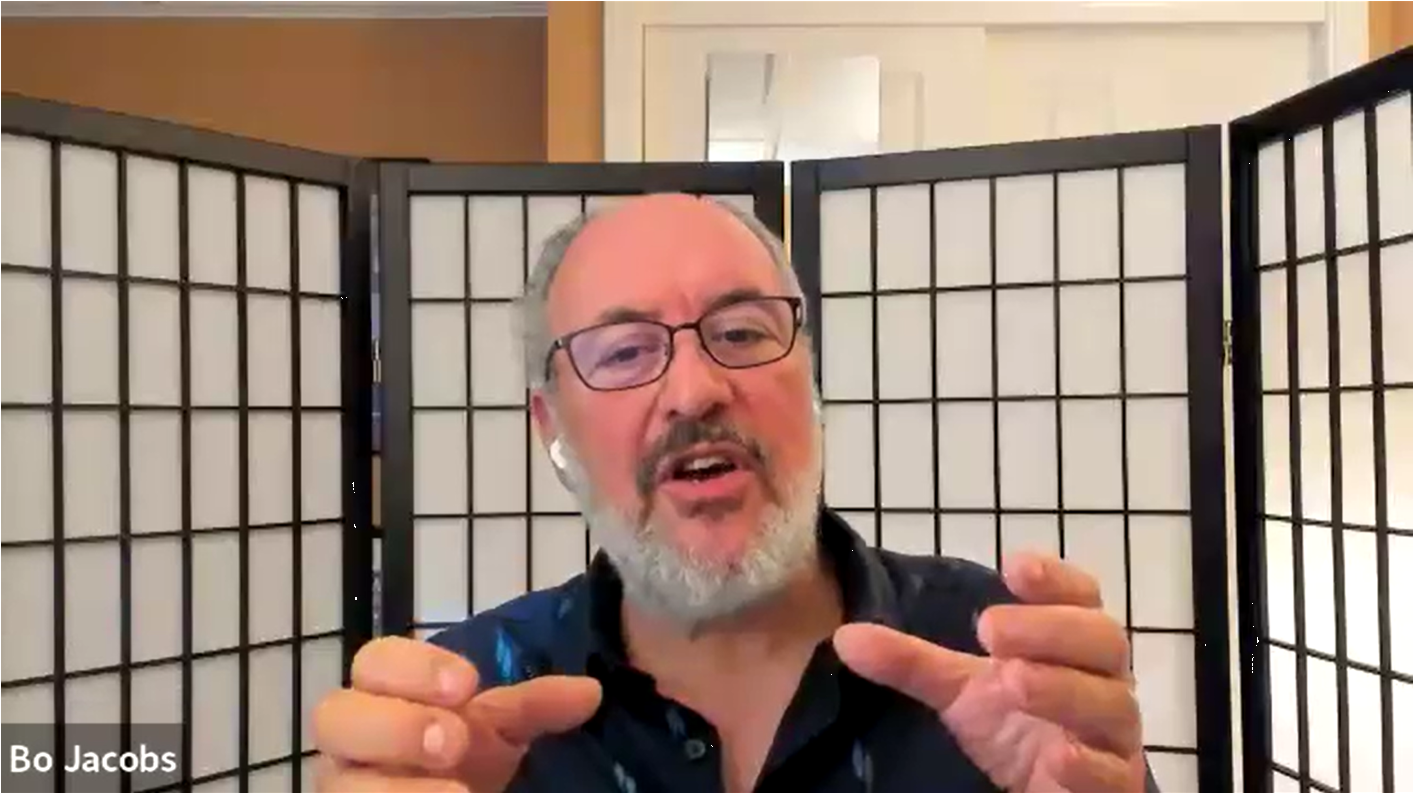 Professor Robert Jacobs
This day’s webinar session welcomed Professor Robert Jacobs (Professor Emeritus, Hiroshima Peace Institute, Hiroshima City University), who taught participants about the impacts of nuclear weapons on society, the economy, and the environment.
Professor Jacobs explained the impacts of nuclear weapons on the environment and humans, particularly focusing on the effects of radiation. He pointed out the existence of “global hibakusha,” who have been exposed to radiation through nuclear testing and accidents, and explained how radioactive fallout spreads and adversely affects health. He stated: “The impacts of nuclear weapons are not merely a matter of past history but an ongoing issue today, and the damage has largely been politically obscured. Discarded nuclear waste represents a negative legacy that will affect the Earth for tens of thousands of years, and we should have a sense of responsibility toward future generations.”
○ Tuesday, July 22: Current and future nuclear risks
 Professor Laura Considine
This day’s webinar session welcomed Professor Laura Considine (Associate Professor in International Politics at the University of Leeds and Co-Director of the Centre for Global Security Challenges), who delivered a lecture on the nuclear risks we currently face and the impacts of emerging technologies on nuclear weapons issues and security.
Professor Considine noted that there are limitations to the safety and effectiveness of nuclear deterrence, referring to the need to recognize the extent to which nuclear deterrence can be managed and to consider whether security based on nuclear weapons is truly sound. She argued, “Amid increasing military buildup and rising tensions in recent years, reducing nuclear risks and preserving peace have become urgent priorities.”
○ Thursday, July 24: Building peace in times of change
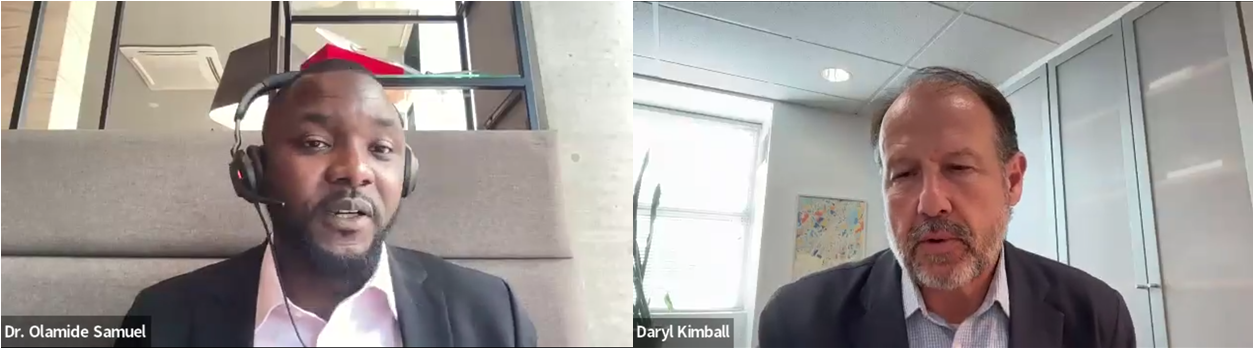 Photo on the left:Mr. Olamide Samuel Photo on the right:Mr. Daryl G. Kimball
This day’s webinar session welcomed Mr. Olamide Samuel (Network and Engagement Specialist at the Open Nuclear Network) and Mr. Daryl G. Kimball (Executive Director of Arms Control Association) and explored the theme “Building peace in times of change.”
Mr. Samuel discussed how peace is defined in an international society in which nuclear weapons exist, the factors that lead to nuclear conflict and arms races, and the roles that various actors, including politicians, research institutions, and young people, can play in advancing disarmament. He pointed out that collaboration among political actors, civil society, and others is essential for the abolition of nuclear weapons and that each group has a role to play. He also encouraged participants to consider whether nuclear weapons can be abolished within our lifetimes and, if so, what actions and conditions would be necessary.
Mr. Kimball discussed the challenges currently surrounding nuclear disarmament, the necessity of disarmament, and the factors required for its realization, drawing on past initiatives, historic examples, and related sources. He stated, “While the current international situation is unstable and achieving disarmament is extremely difficult, long-term efforts, collaboration, and leadership sustained across multiple generations are indispensable.”
○ Wednesday, July 30: The roles of the UN and civil society for nuclear disarmament
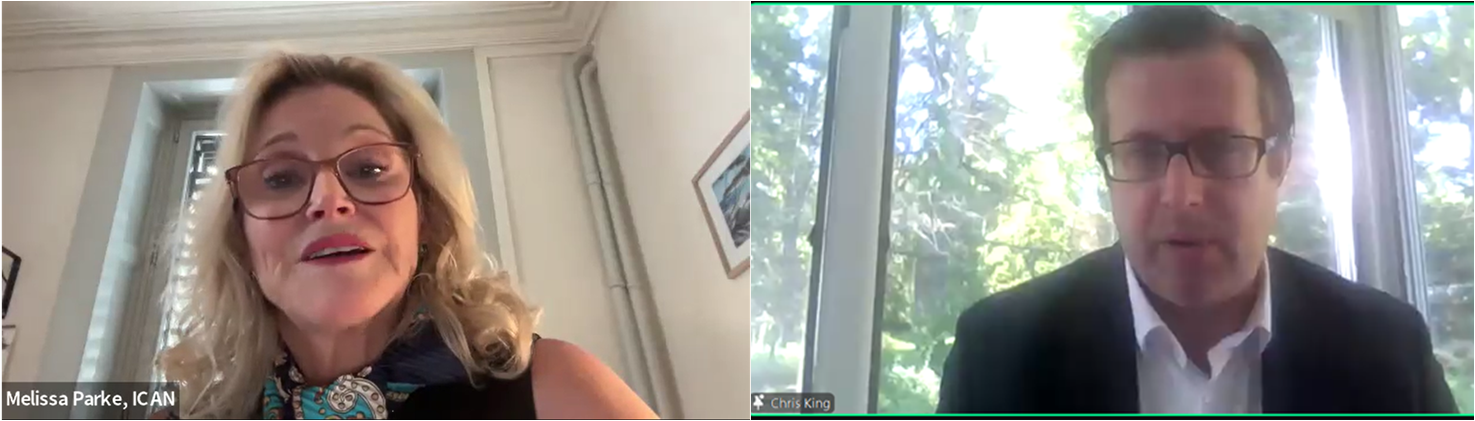 Photo on the left:Ms. Melissa Parke Photo on the right:Mr. Christopher King
This day’s webinar session welcomed Ms. Melissa Parke (Executive Director of the International Campaign to Abolish Nuclear Weapons [ICAN]) and Mr. Christopher King (Deputy Chief of the Weapons of Mass Destruction Branch and Head of the Science and Technology Unit of United Nations Office for Disarmament Affairs [UNODA]), who delivered lectures on the roles of the UN and civil society for nuclear disarmament.
Ms. Parke highlighted the critical role that civil society plays in achieving the abolition of nuclear weapons. She also discussed ICAN’s contributions to nuclear disarmament and to the adoption and entry into force of the Treaty on the Prohibition of Nuclear Weapons (TPNW) while explaining the harmful effects of nuclear weapons on the environment and human rights. She stated: “This year, marking 80 years since the atomic bombings, is a crucial year for those of us striving for nuclear abolition. Each generation has an important role to play in ensuring that the tragedy of 80 years ago remains a part of history.”
Mr. King spoke on the theme of the role of the UN for nuclear disarmament and its relevance to other global issues, introducing the history of disarmament activities within the UN and how the UN is assisting countries in their efforts toward global nuclear disarmament.
Read more(Hiroshima Session day1) →