Research Results and
Recommendations for Download


Friday, October 17—Day 4
○ Main activities of Day 4
- Courtesy call on Mr. Mikiharu Nakai, Deputy Mayor of Hiroshima City
- Exchange of views with an A-bomb legacy successor and a Youth Peace Volunteer
- Visit to the Radiation Effects Research Foundation (RERF)
- Visit to Hijiyama Military Cemetery
On the fourth day of the Hiroshima-ICAN Academy, participants met with Deputy Mayor Nakai of Hiroshima City at the International Conference Center Hiroshima.
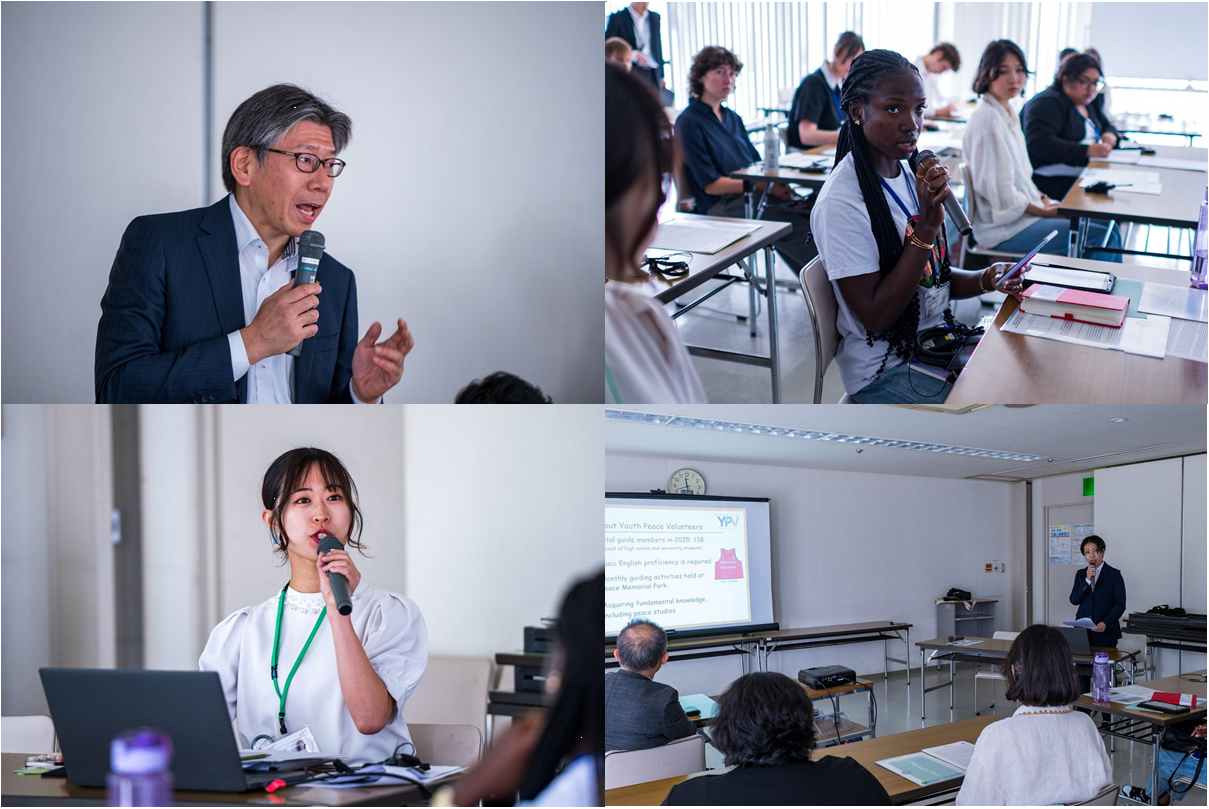 Top left: Vice Mayor Nakai Bottom left: Ms. Tsugumi Inoue Bottom right: Ms. Hinata Tamaki
During the meeting, Deputy Mayor Nakai spoke about the City’s peace-related initiatives, including programs launched to mark the 80th anniversary of the atomic bombing, efforts to pass on the experiences of hibakusha to future generations, and the activities of Mayors for Peace, which is chaired by the Mayor of Hiroshima.
Following the meeting, participants held an exchange of views with Ms. Tsugumi Inoue, an A-bomb legacy successor, and Ms. Hinata Tamaki, a Youth Peace Volunteer.
They shared what had motivated them to become involved in their respective activities and described the work they are currently engaged in.
Through these exchanges, participants learned that, even though Hiroshima Prefecture and Hiroshima City are both located in the same atomic‑bombed region, their peace initiatives, including efforts to develop the next generation of leaders, and their approaches to nuclear abolition differ.
In the afternoon, participants visited the Radiation Effects Research Foundation (RERF). They attended a briefing on the Foundation’s history and research activities and toured the facility under the guidance of Mr. Jeffrey Hart of the Public Relations and Publication Office.
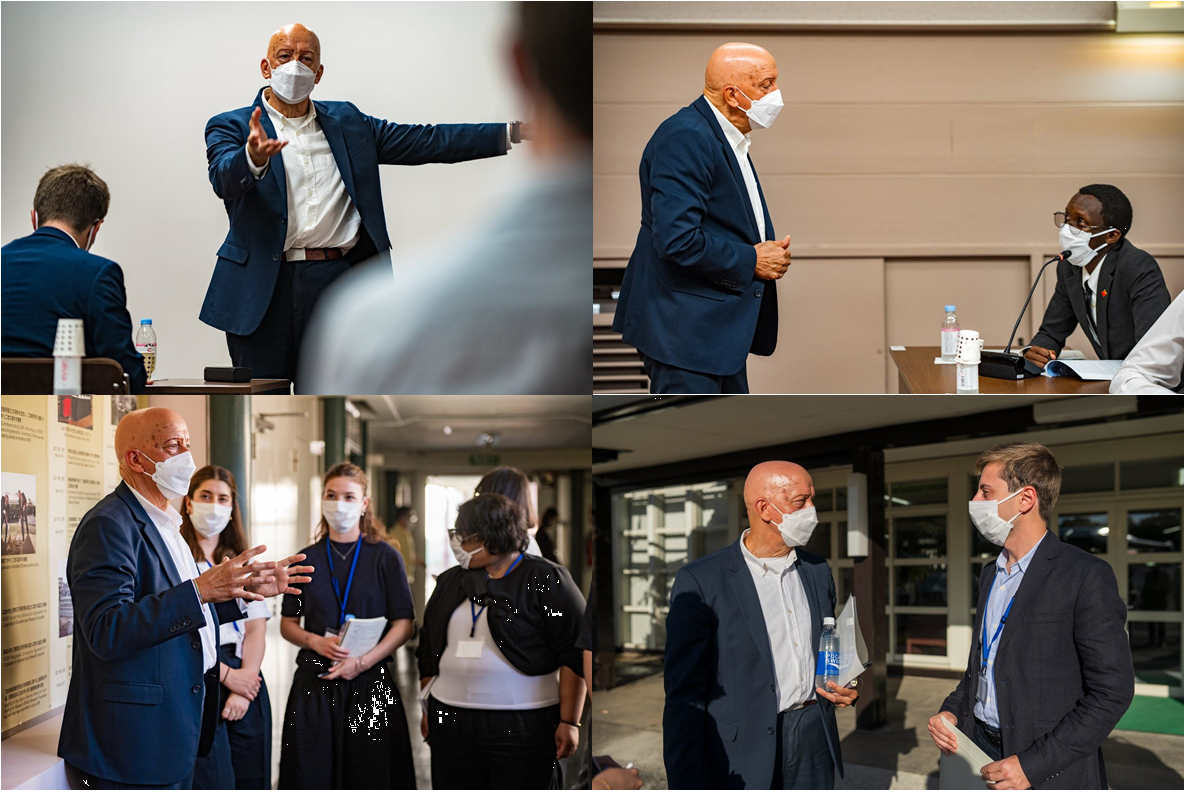 Mr. Jeffrey Hart explaining RERF's initiatives and facilities
The overview introduced studies on the effects of radiation on the human body and the role RERF has played in atomic-bomb-related medical research.
During the tour of the facility, participants learned about the history of the Foundation, including past practices in which some hibakusha were subjected to research wi
thout their consent. Although such practices are no longer carried out, the account appeared to have deeply shocked the participants.One participant expressed surprise that the diagnostic and treatment methods developed through RERF’s efforts benefit not only those exposed to the atomic bombing but also people exposed to radiation from other causes, including nuclear power plant accidents.
Subsequently, the participants visited Hijiyama Military Cemetery.
The cemetery is the resting place of solders of the former Imperial Japanese Army from the Meiji era onward. While it suffered extensive damage from the atomic bombing, it has been restored to its present state with the cooperation of many people. In addition to Japanese graves, the cemetery also contains the graves of foreign soldiers from countries such as China, Germany, and France.
After the bombing, a temporary relief station was established at Hijiyama, where large numbers of injured people sought help, yet many ultimately lost their lives. Participants seemed deeply affected as they learned about this history.
Read more(Hiroshima Session day5) →