Research Results and
Recommendations for Download


Youth Dialogue Event for Global Peace 2025
Every year on August 6th, Hiroshima Prefecture/the Hiroshima Organization for Global Peace(HOPe) and the Hiroshima Office of the United Nations Institute for Training and Research(UNITAR) hold the "Youth Dialogue Event for Global Peace." This event allows young people and current high school students in Hiroshima Prefecture to engage in dialogue with leaders active in the international community, in order to deepen their understanding of the perspectives and concrete actions that should be taken to realize a peaceful world free of nuclear weapons.
We held the 2025 event as follows.
Overview
Date:
Wednesday, August 6, 2025 12:00 - 16:00
Location:
ANA Crowne Plaza Hotel Hiroshima 3rd Floor “Orchid”
Schedule:
Session 1 (12:00-14:00) : Roadmap creation (Group Work)
Session 2 (14:30-16:00) : Roadmap presentation
*Guests attended Session 2 only.
Theme:
80 Years After the Hiroshima A-bomb:Youth Messages From Hiroshima to the World—Roadmaps Toward a World Without Nuclear Weapons and Sustainable Peace
Opening Remarks:
Fumio Kishida, Member of the House of Representatives and Former Prime Minister
Participants:
- Approximately 22 high school students participating in the UNITAR Hiroshima Youth Ambassador Program and graduates of the Prefectural Human Resources Development Program
- Audience(university and high school sudents): 64 people
- Izumi Nakamitsu : UN Under-Secretary-General and High Representative for Disarmament Affairs
- Toshiharu Goto : Hibakusya(atomic bombing survivor)
- Luli van der Does : Director of the Center for Peace, Hiroshima University
- Regis Savioz : Regional Director for Asia and the Pacific, International Committee of the Red Cross
- Hidehiko Yuzaki : Governor of Hiroshima Prefecture and President of HOPe
- Michelle Gyles-McDonnough : Assistant Secretary-General of the United Nations and Executive Director, UNITAR
*Honorifics omitted
Streaming:
Livestreaming on the Hiroshima Organization for Global Peace(HOPe) YouTube channel
Livestreaming at the Hiroshima Prefecture booth at the Osaka-Kansai Expo
Contents of guest speeches
Fumio Kishida, Member of the House of Representatives and former Prime Minister
"Today's security environment is becoming increasingly severe and complex, and the wall of nuclear weapons looms large before us. That is why we need to raise momentum toward the abolition of nuclear weapons. This is the mission of Japan, the only nation to have suffered atomic bombings during wartime."
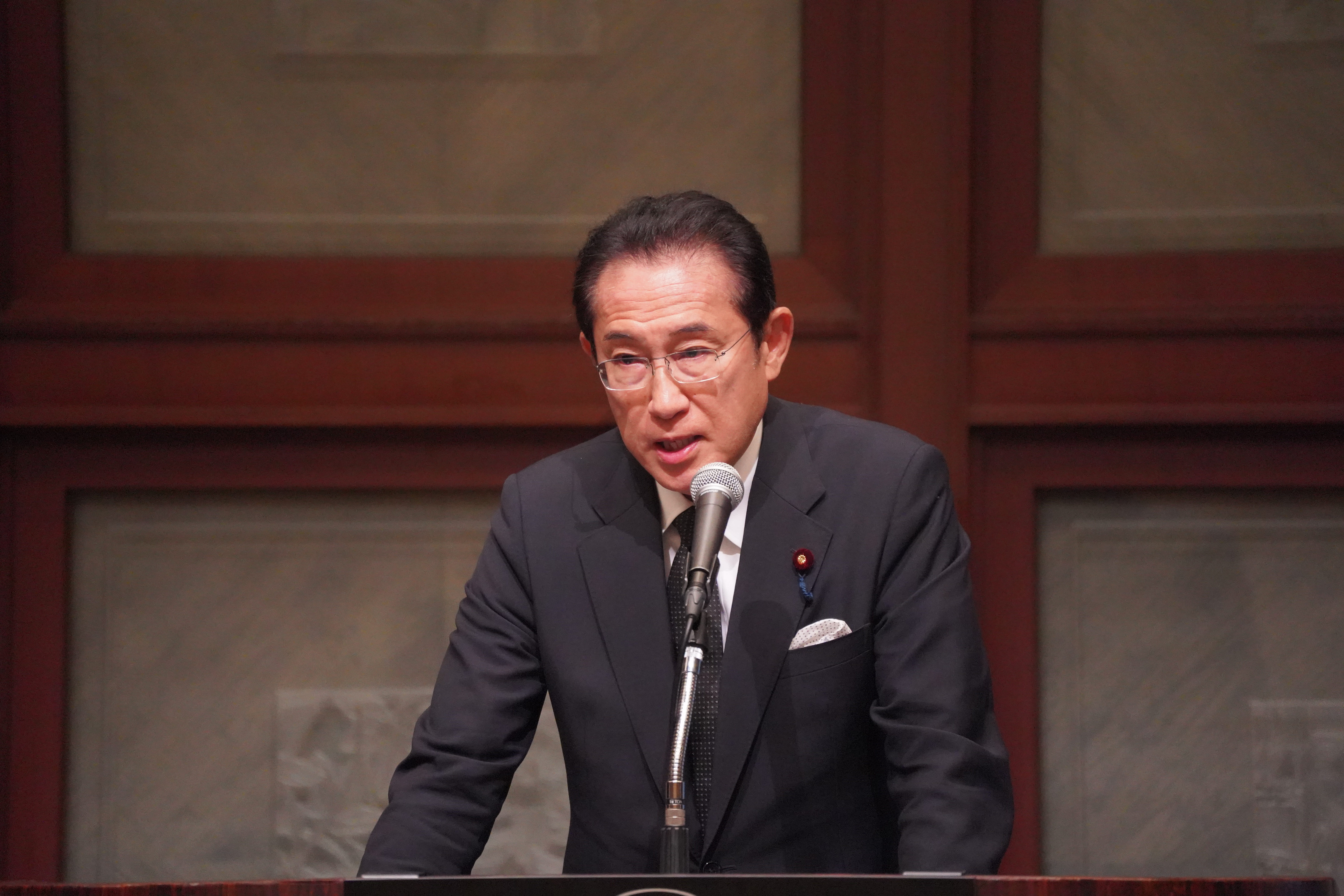 Fumio Kishida, Member of the House of Representatives and former Prime Minister
Roadmap presentation by youths
Based on the assumption that awareness and a sense of crisis about the use of nuclear weapons will eventually fade, high school students developed their own ideas for measures that can be taken now to prevent this, created a roadmap, and posted it on YouTube.
| Peace education | Passing down the atomic bombing experience | Human rights and international law | |
| 2025-2030 |
-Establishment of a department specializing on peace studies at universities -Curriculum development from multiple perspectives,including disarmament,SDGs, and conflict resolution |
-Building networks with affected areas both domestically and internartionally -Creation and popualrization of a VR atomic bomb experience simulation |
-Launch of a citizen participation campaign -Japan signs and ratifies the Treaty on the Prohibition of Nuclear Weapons |
| 2031-2035 | -Working with UNESCO to reform the curriculum so that it can be used by countries around the world | -Development of an experience facility that uses holograms to allow visitors to feel as if atomic bomb survivors are speaking to them in person | -Promotion of institutional reforms, such as establishing accountability regarding the exercise of the Security Council's veto power |
| 2036-2040 | -Peace education conducted around the world | -Exhibition of the developed holograms at a museum | -Adoption of s UN resolution condemning the abuse of the veto power |
| 2041-2045 | -Utilizing AI to optomize learning of peace education for each individual | -Advance technological innovation in holograms and create a permanent exhibit at the Peace Memorial Museum | -Adoption of a UN resolution that politically denies the legitimacy of nuclear deterrence theory |
| 2046-2050 | -Establishment of a peace education certification system that guarantees the educational standards in each country. | -Hibakusya(atomic bomb survivor)testimonies registered in UNESCO's Memory of the World Program |
-All countries sign the Treaty on the Prohibition of Nuclear Weapons -Shift from nuclear deterrence to diplomacy for peace |
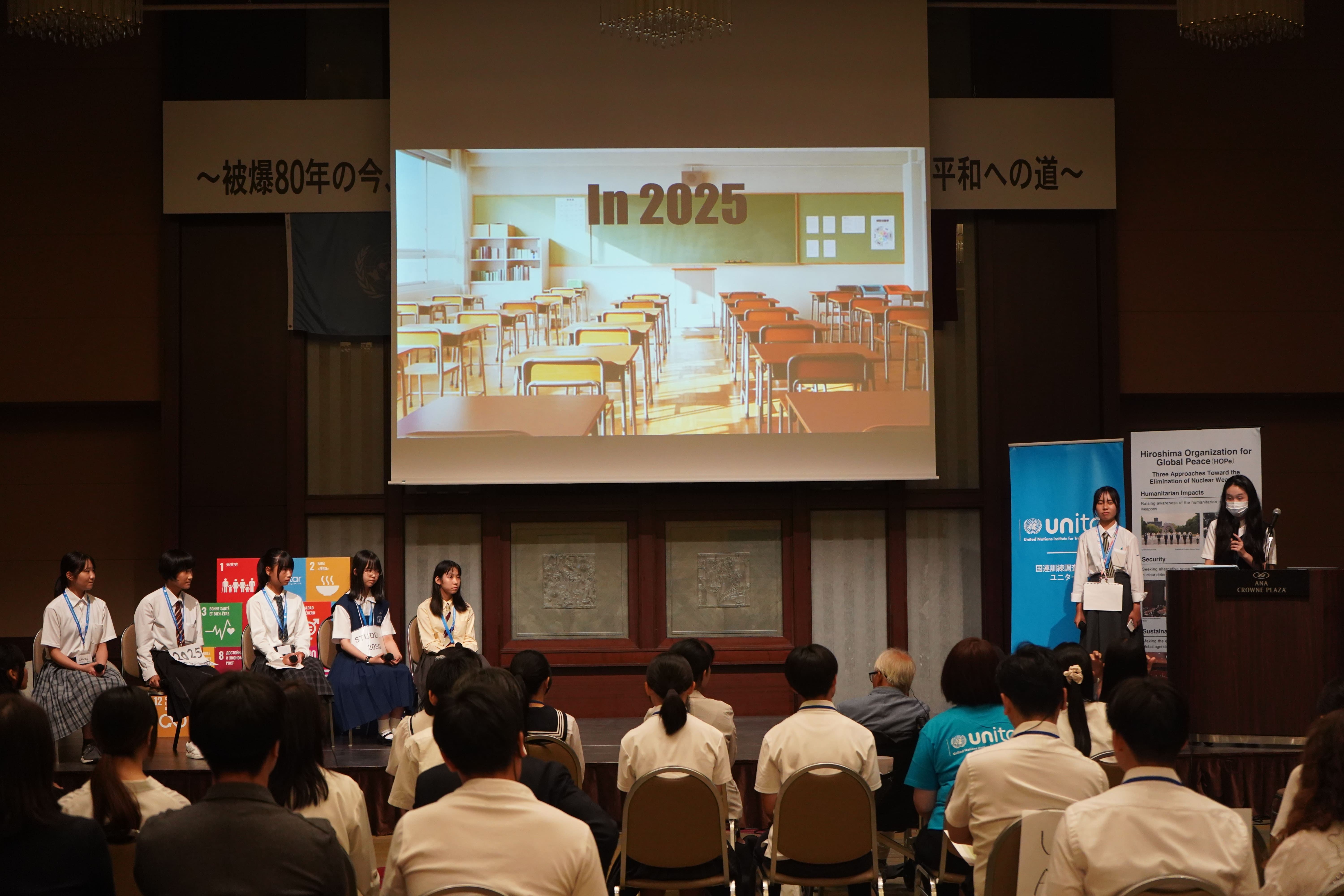 Students presenting their roadmap
Guest Comments
Michelle Gyles-McDonnough (Assistant Secretary-General of the United Nations and UNITAR Executive Director)
- All actions require dialogue. I saw a concrete roadmap for working toward peace by properly utilizing science and technology such as AI. The key is in how we utilize the tools we have to bring about peace.
- The definition of peace is a world without war where people have equal opportunities.
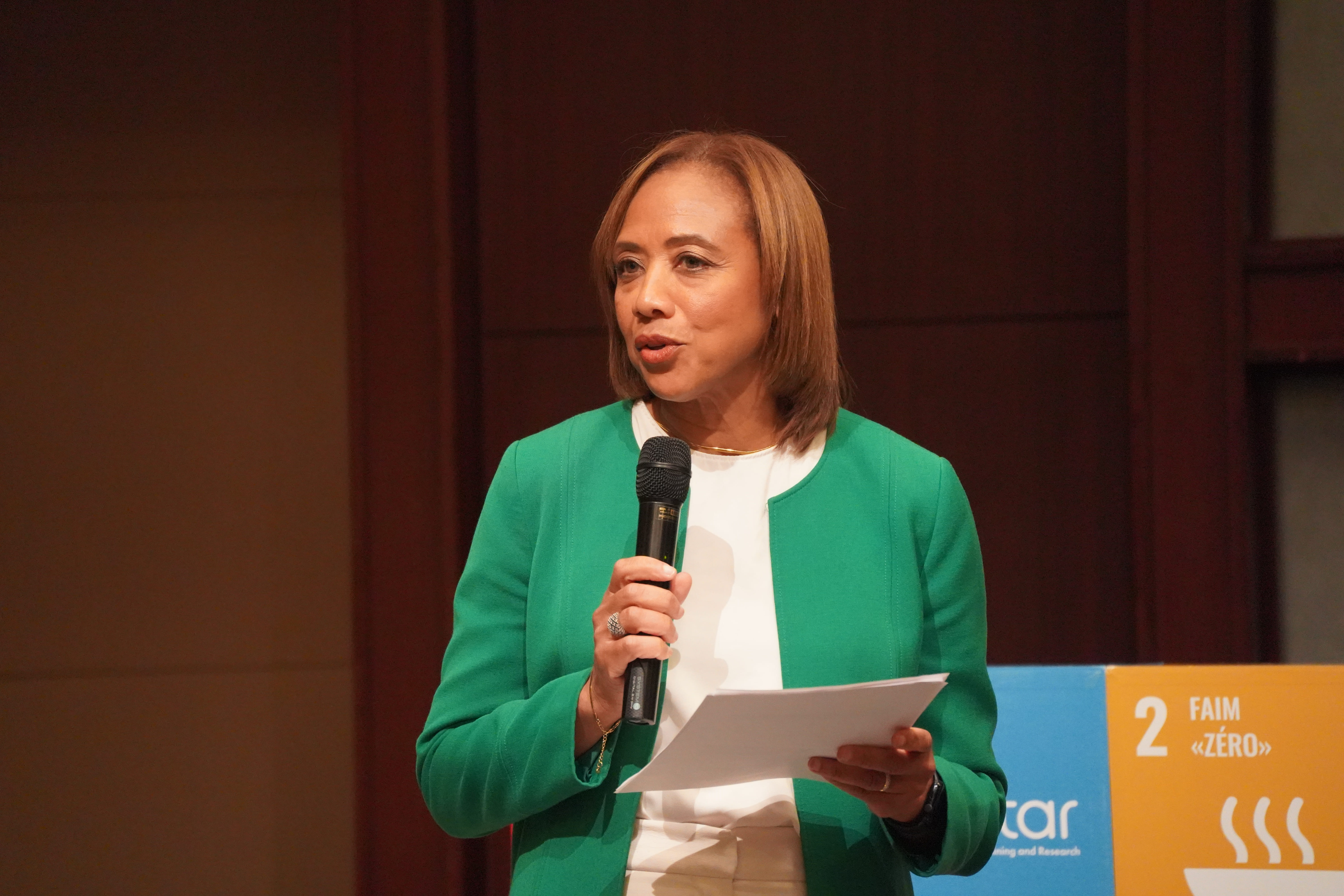 Michelle Gyles-McDonnough (Assistant Secretary-General of the United Nations and UNITAR Executive Director)
Izumi Nakamitsu (United Nations Under-Secretary-General and High Representative for Disarmament Affairs)
- It is important that each and every one of us take the step to bring about change and create this kind of future. This will open up new perspectives and allow us to consider the safety and prosperity of our communities in new ways.
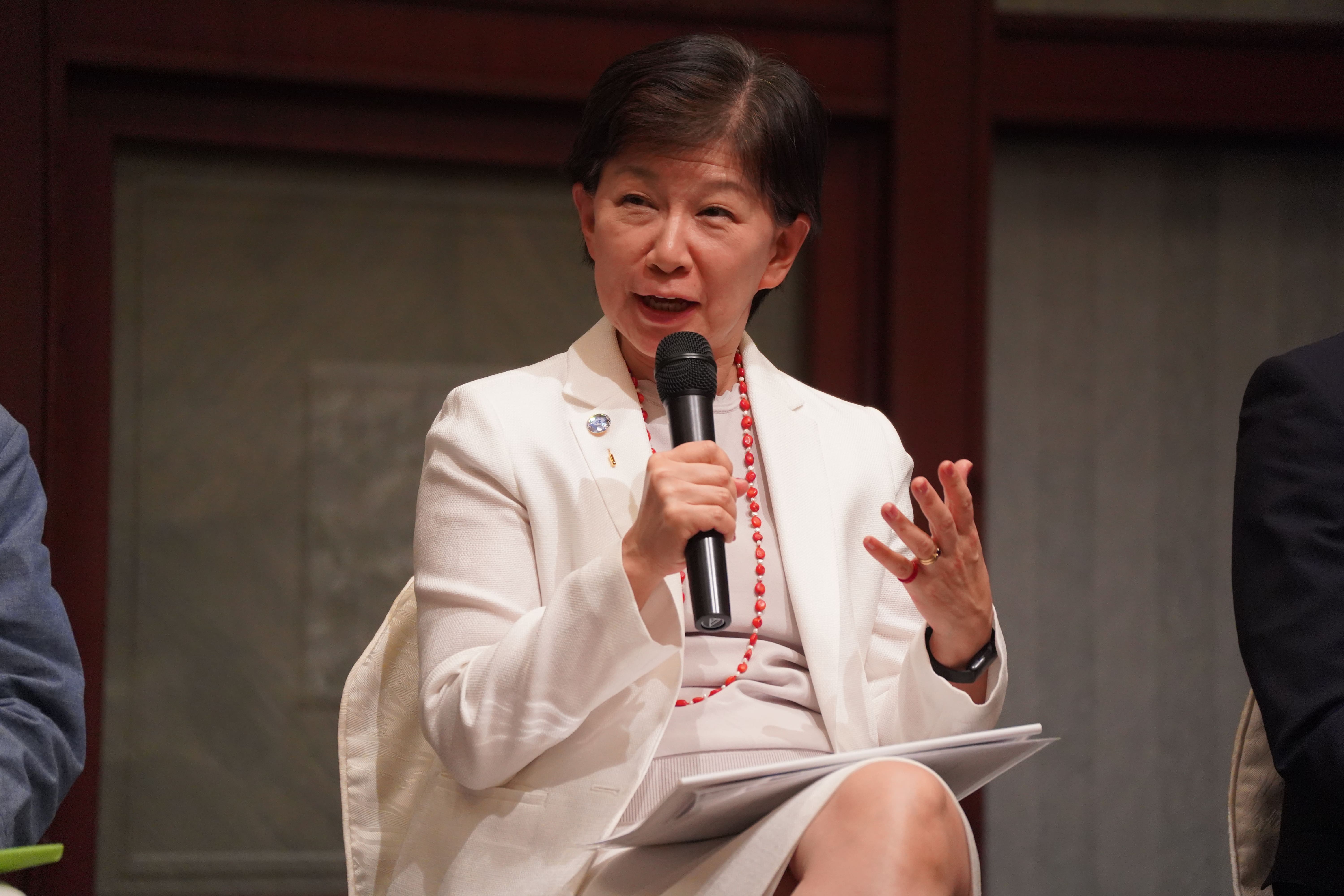 Izumi Nakamitsu (United Nations Under-Secretary-General and High Representative for Disarmament Affairs)
Hidehiko Yuzaki (Governor of Hiroshima Prefecture, President of HOPe)
- In a world where war continues, what should we, from Hiroshima, do?
"There are three important approaches—the humanitarian impacts approach, the security approach, and the sustainability approach."
- In an era when the number of surviving atomic bomb survivors is decreasing, what is necessary for students to maintain an awareness toward peace?
"We have relied too much on the testimonies of atomic bomb survivors. It is important that we, as the next generation, think proactively about peace."
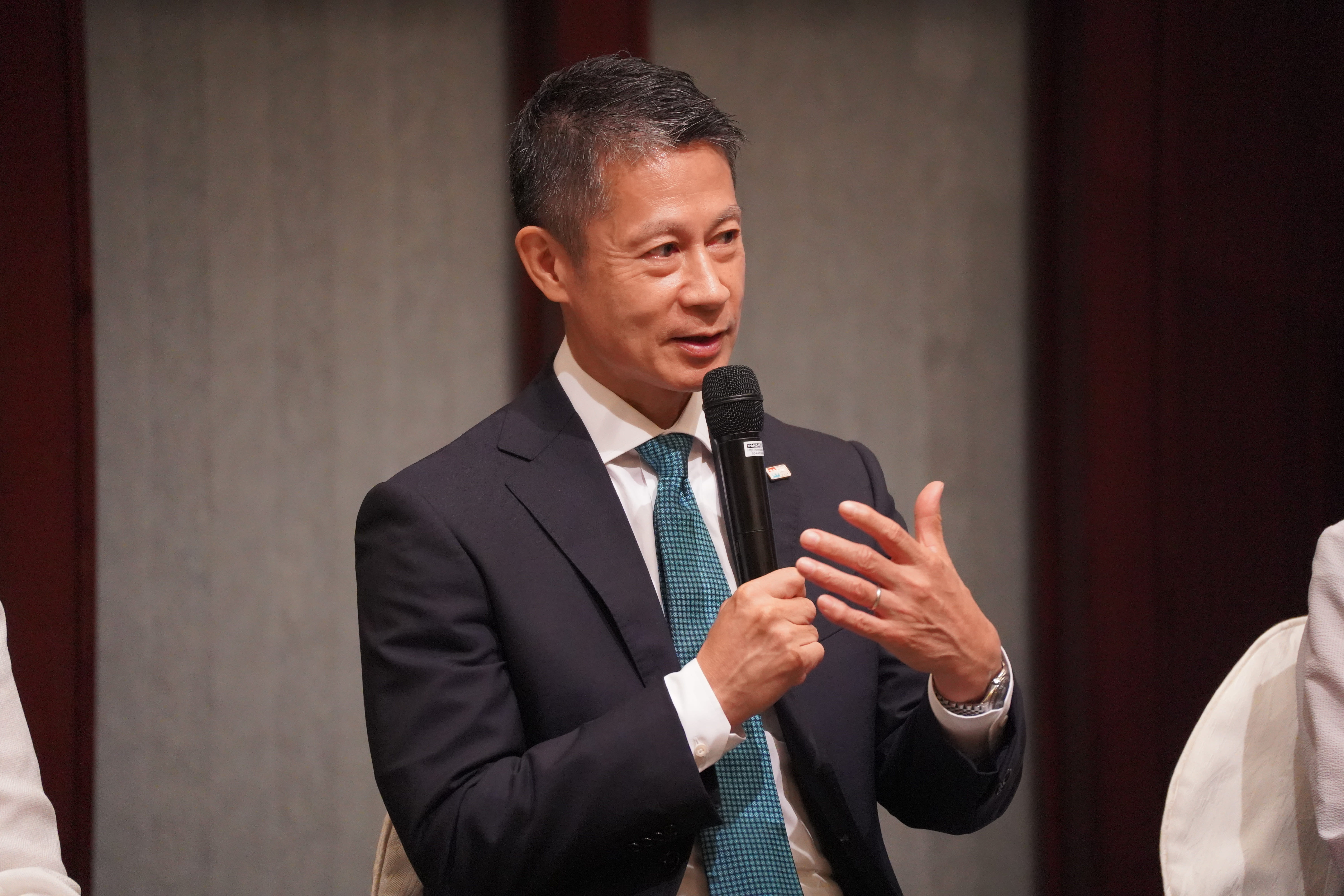 Hidehiko Yuzaki (Governor of Hiroshima Prefecture, President of HOPe)
Régis Savioz (Regional Director for Asia and the Pacific, International Committee of the Red Cross (ICRC))
- Realistically, the roadmap needs to be further refined, but I commend the efforts being made from an academic and professional perspective.
- Political leaders should once again express respect for international human rights law and make the final push toward the abolition of nuclear weapons.
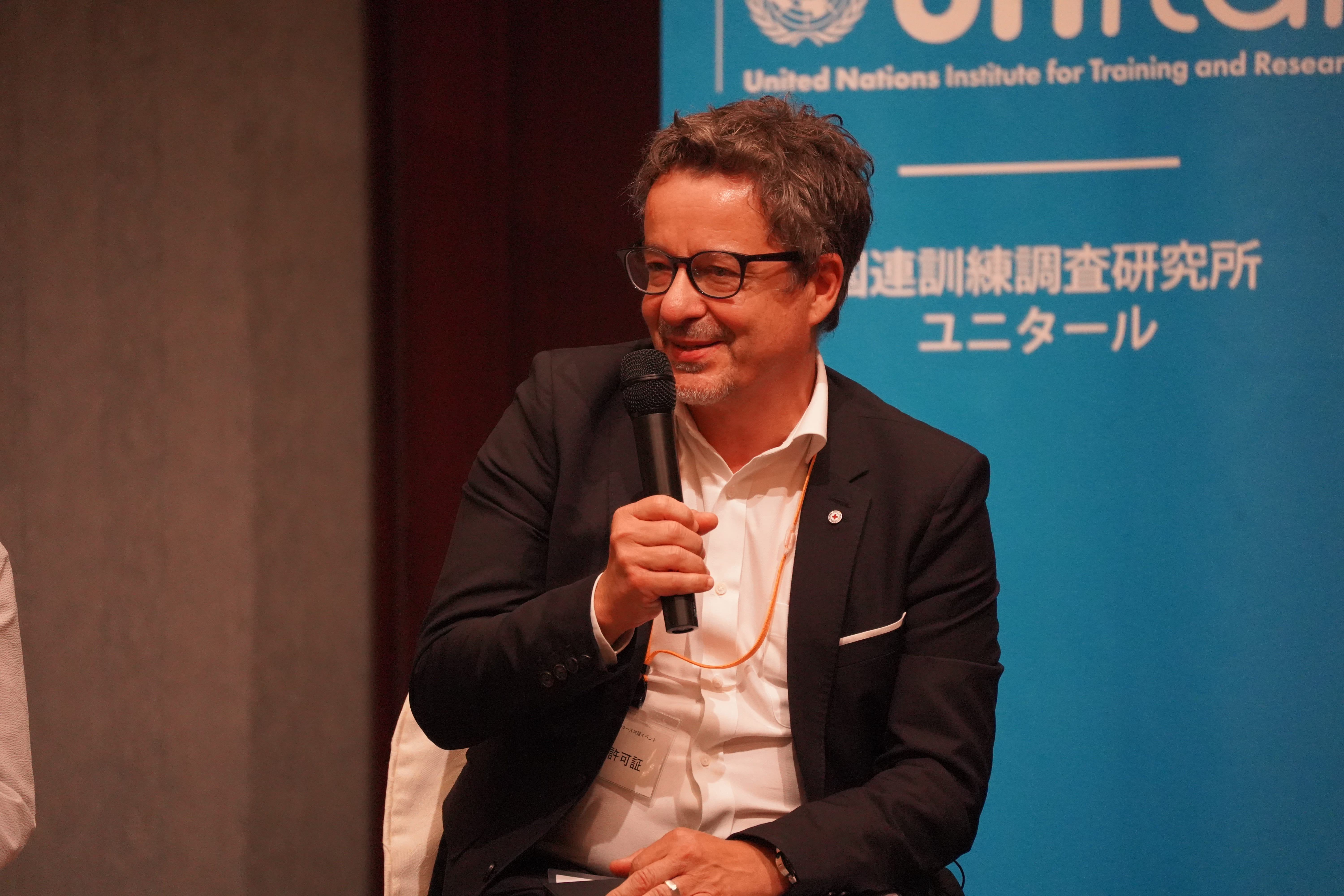 Régis Savioz (Regional Director for Asia and the Pacific, International Committee of the Red Cross (ICRC))
Luli van der Does (Director of the Center for Peace, University of Hiroshima)
- I was inspired by the young people who used their own ideas to convey the reality of the atomic bombing and what they themselves could do.
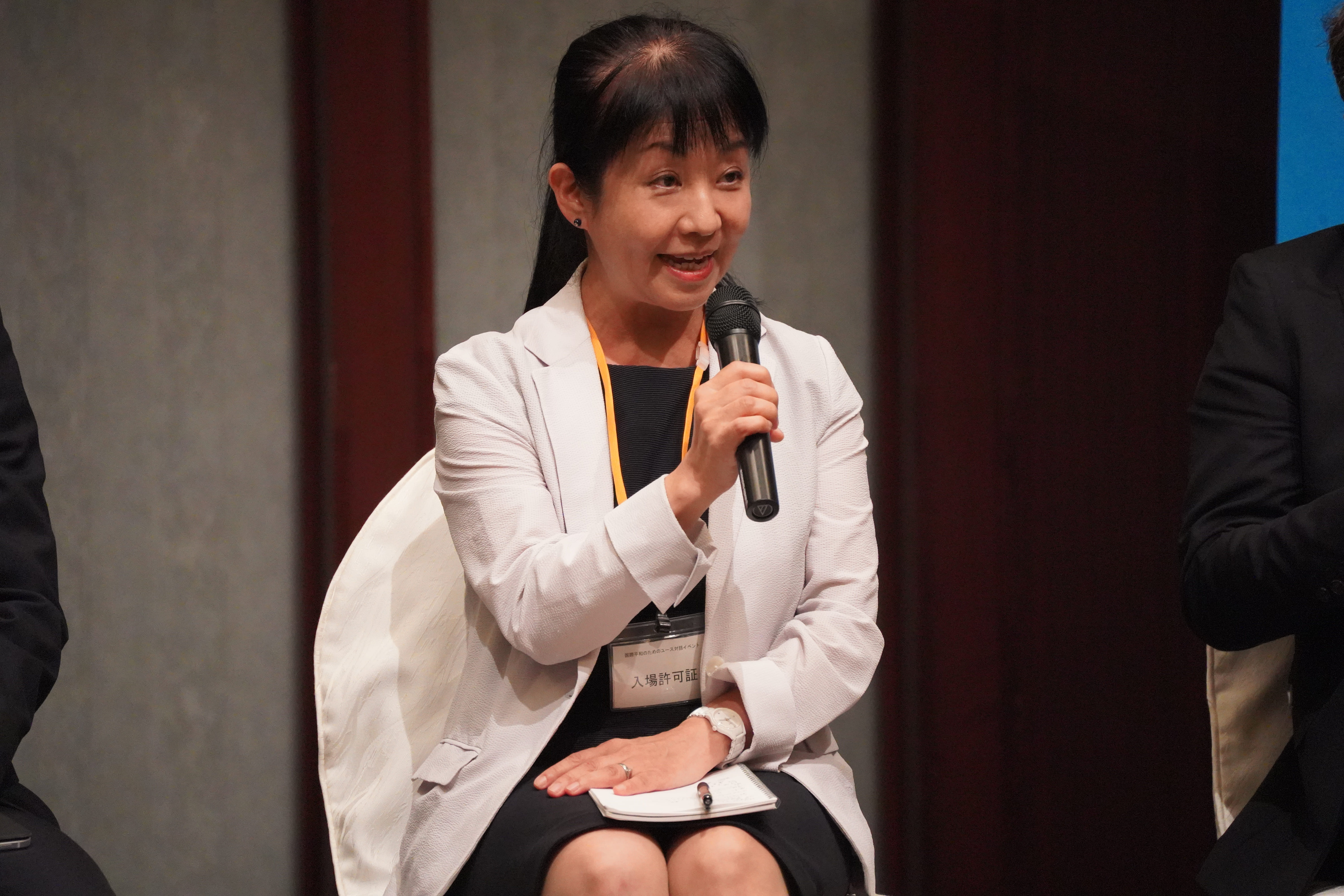 Luli van der Does (Director of the Center for Peace, University of Hiroshima)
Toshiharu Goto (atomic bombing survivor)
- The worst thing that can happen is that it leads to war, and I have felt many times like I was on the verge of death.
- The people, leaders of national and local governments, and atomic bomb survivors need to work together to achieve peace.
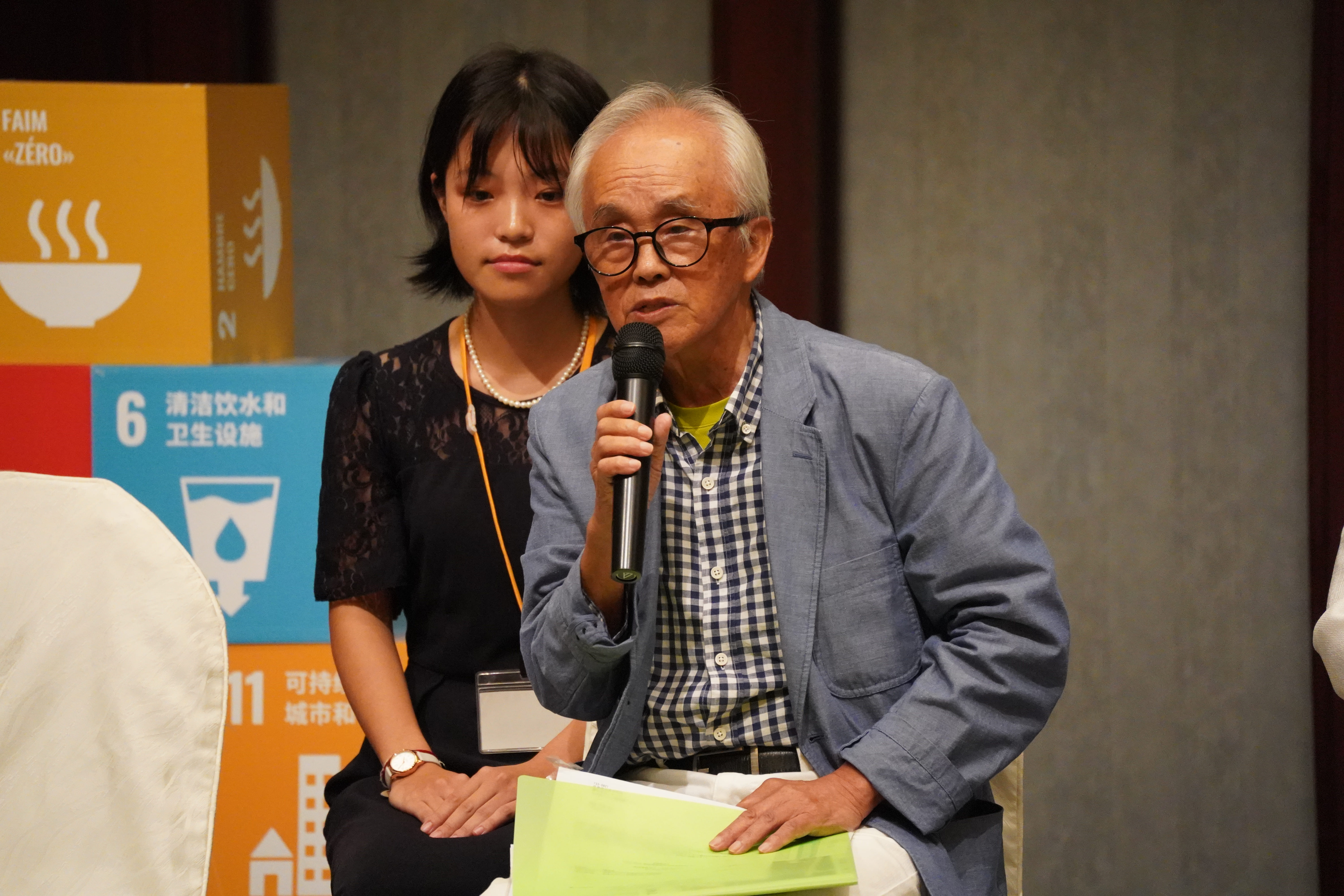 Toshiharu Goto (atomic bombing survivor)
Even after the event concluded, the venue remained buzzing with energy as young participants eagerly asked questions and took photos. Engaging in thought-provoking dialogue with global leaders active in nuclear disarmament and non-proliferation offered young people a rare and valuable experience. We hope this event will inspire young people to take on various challenges, ultimately contributing to the realization of a peaceful world free of nuclear weapons.