Research Results and
Recommendations for Download


The Hiroshima session of the “Hiroshima-ICAN Academy on Nuclear Weapons and Global Security” was held in Hiroshima City for five days from October 14 (Tue.) to October 18 (Sat.), 2025.
Tuesday, October 14—Day 1
○ Main activities of Day 1
- Orientation
- Visit to the Hiroshima Peace Memorial Park
- Courtesy call on Governor Yuzaki of Hiroshima Prefecture
- Welcome dinner
Day 1 marked the beginning of the five-day program, bringing together young participants from around the world in Hiroshima. Over the following days, through activities such as interactions with hibakusha (atomic bomb survivors) and a visit to the Hiroshima Peace Memorial Museum, participants engaged with the realities of the atomic bombing. Twenty selected participants gathered in Hiroshima and, over the five days, learned about and discussed nuclear weapons and security in face-to-face sessions. While they had previously attended online lectures together during the webinar sessions held in July, this was their first opportunity to meet one another in person.
Among the participants, some expressed excitement at meeting peers who share the common goal of nuclear abolition and with whom they would spend the next five days, while others appeared visibly nervous at the outset of the program.
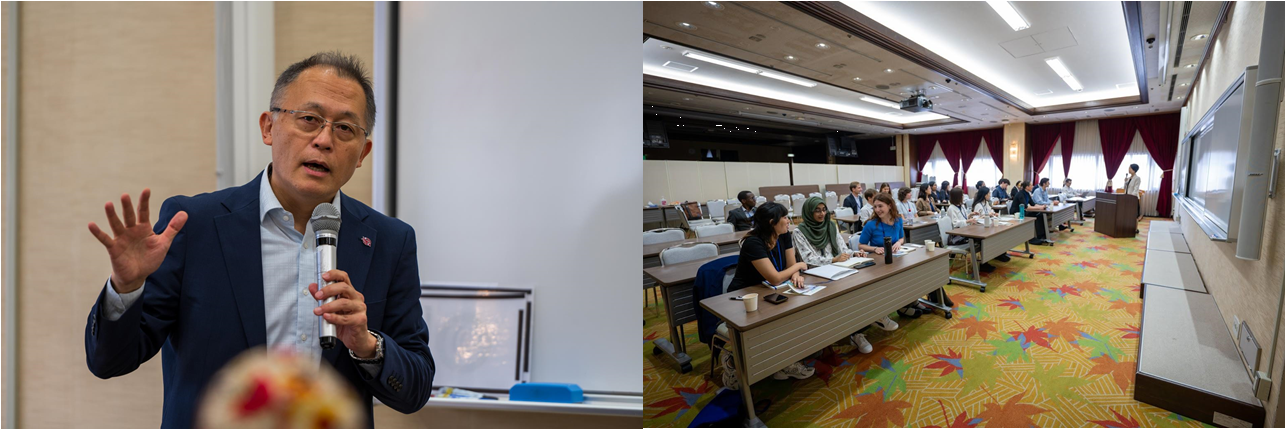 Photo on the right:Mr. Akira Kawasaki delivering his remarks Photo on the right:Scene from the orientation
An orientation session was held at the start of the program.
To open the session, Mr. Akira Kawasaki (Executive Committee Member of Peace Boat/International Steering Group Member and President of ICAN) provided an overview of the global situation surrounding nuclear weapons and expressed his expectations for the participants. He noted that individuals who have worked toward the abolition of nuclear weapons in diverse contexts have gathered in Hiroshima and emphasized the importance of actively exchanging views with others who may have different perspectives and backgrounds. He encouraged participants to use the program as an opportunity for such discussions and expressed his hope that they would learn a great deal from Hiroshima.
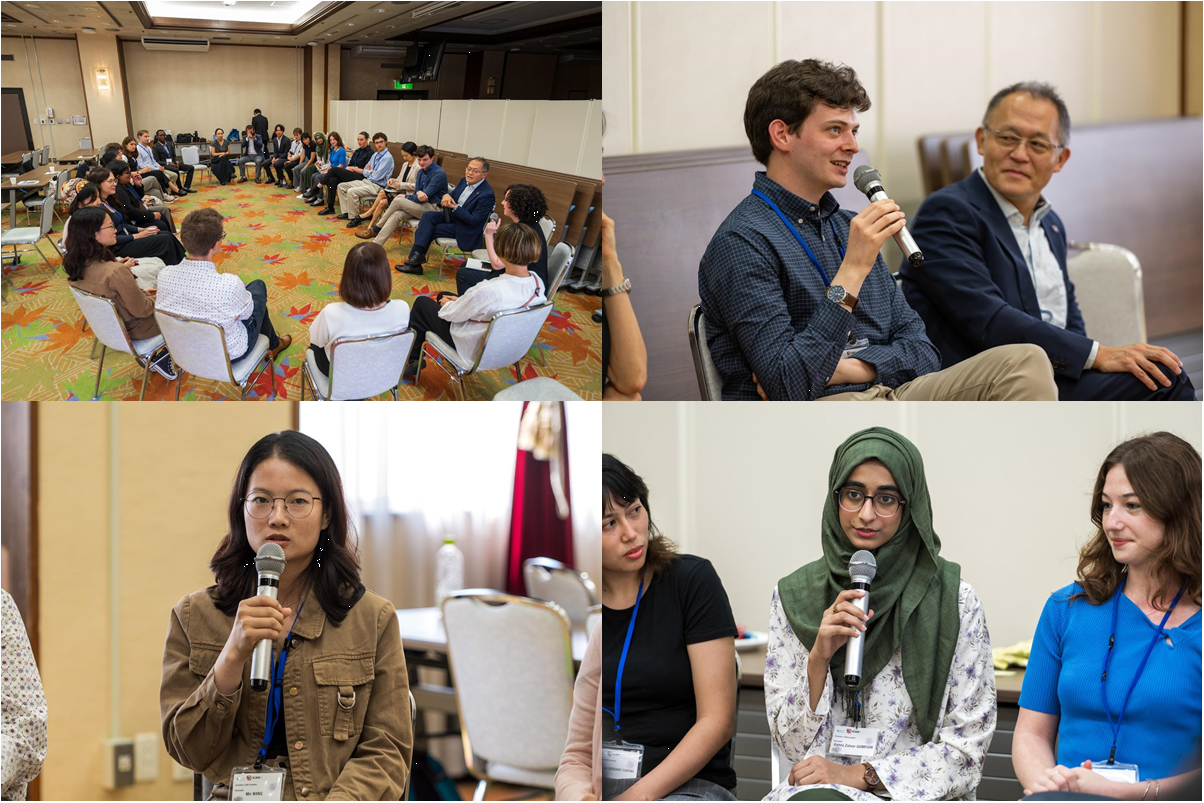 Scene from the icebreaker activity
This was followed by an icebreaker activity focused on self-introductions and what participants hoped to learn through the Hiroshima session. Participants shared their enthusiasm for the Academy and nuclear disarmament initiatives being undertaken in their home countries.
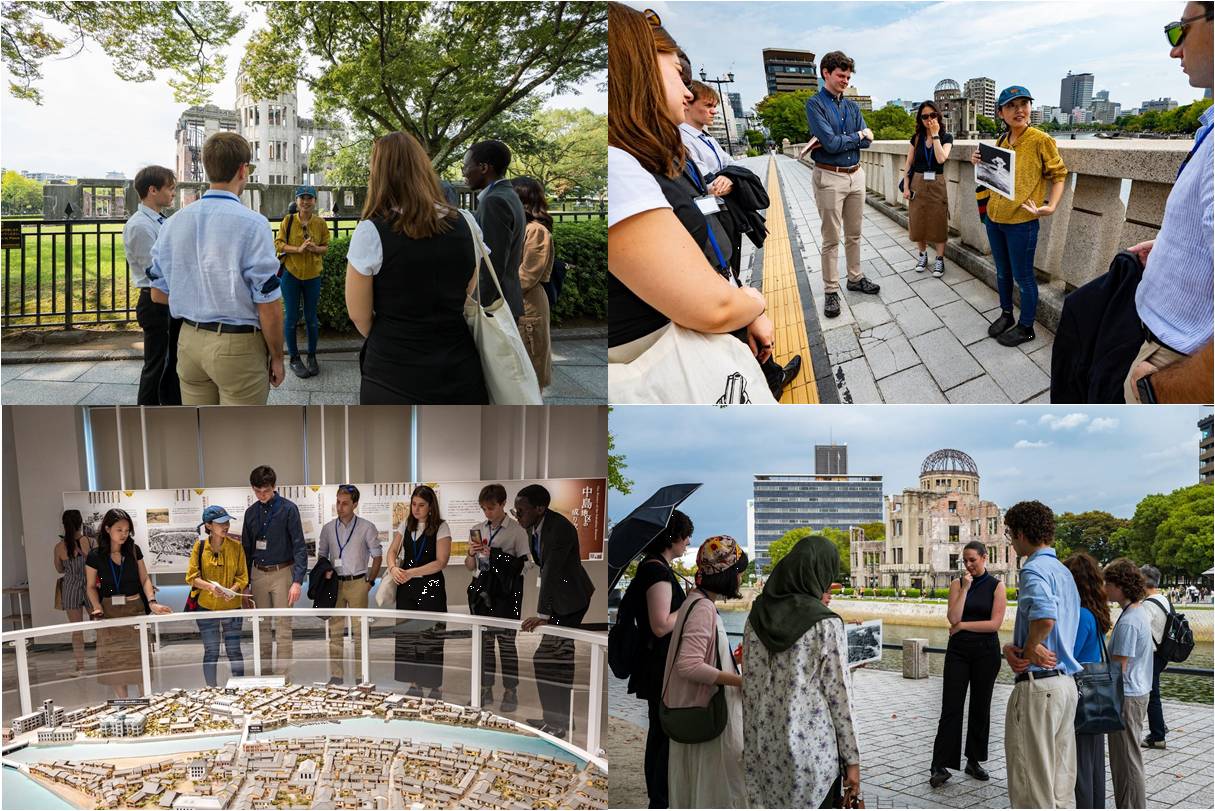 Participants touring Peace Park
In the afternoon, participants were divided into three groups to tour the monuments in the Peace Memorial Park, including the Cenotaph for the Atomic Bomb Victims and the Children’s Peace Monument. They received explanations about the background of each monument and how the buildings in the park had been used before the atomic bombing, were used at the time of the bombing, and are being used in the present day.
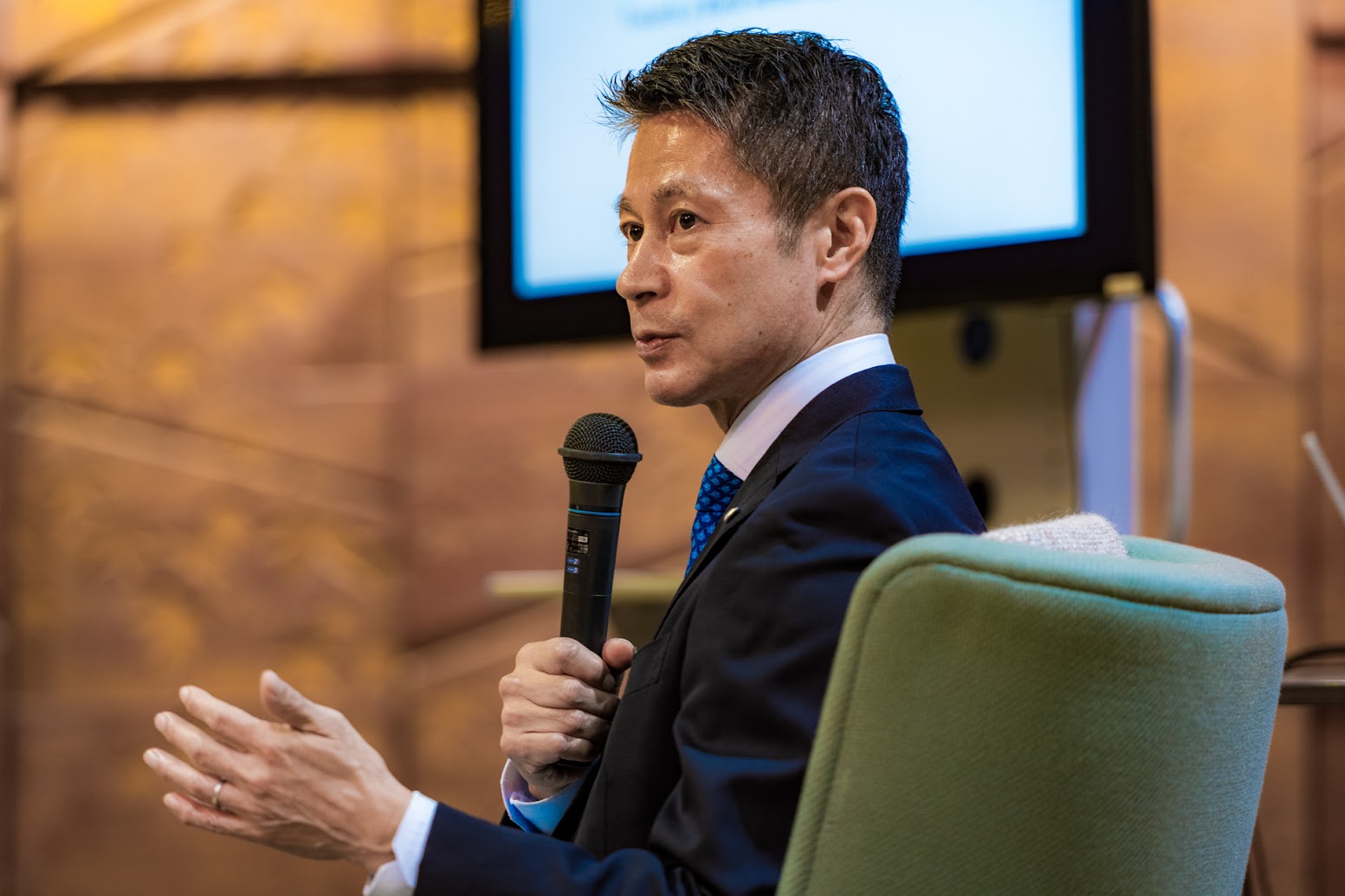 Governor Yuzaki explains Hiroshima Prefecture's peace initiatives
Following that, participants paid a courtesy call on Mr. Hidehiko Yuzaki, the Governor of Hiroshima Prefecture. During the visit, Governor Yuzaki delivered a talk on the peace initiatives of Hiroshima Prefecture and Hiroshima Organization for Global Peace (HOPe), after which participants engaged in a Q&A session and exchanged views on the global situation surrounding nuclear weapons.
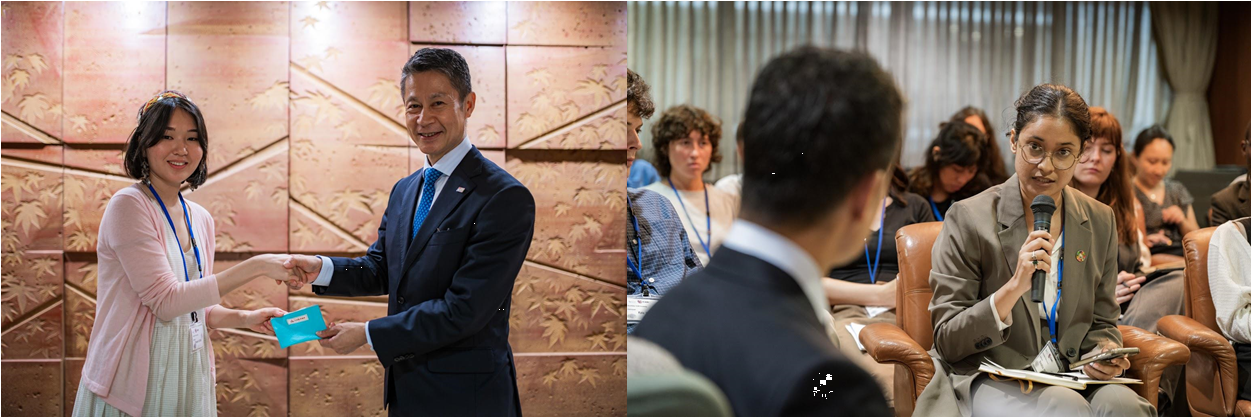
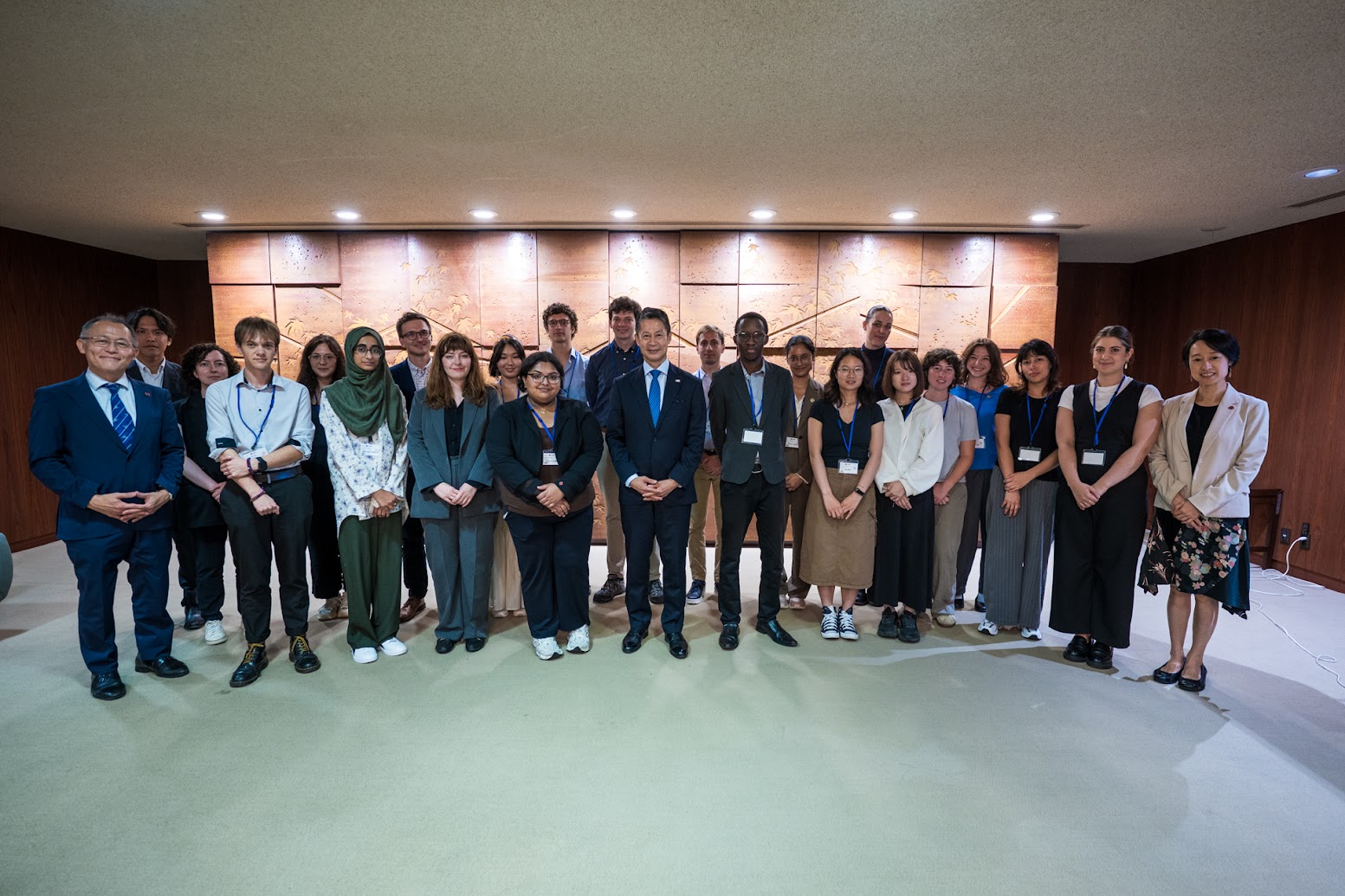 The scene from the courtesy visit
Among the topics discussed, particular interest was shown in the concept of how business can contribute to peace, which was introduced as part of HOPe’s sustainability approach. Participants asked about specific linkages and practical forms such contributions might take.
In responding to the questions, Governor Yuzaki noted that without peace, economic activity cannot be sustained and a sustainable future is unattainable. He also referred to the substantial annual expenditures on nuclear weapons production and the possibility of redirecting such funds to other economic activities.
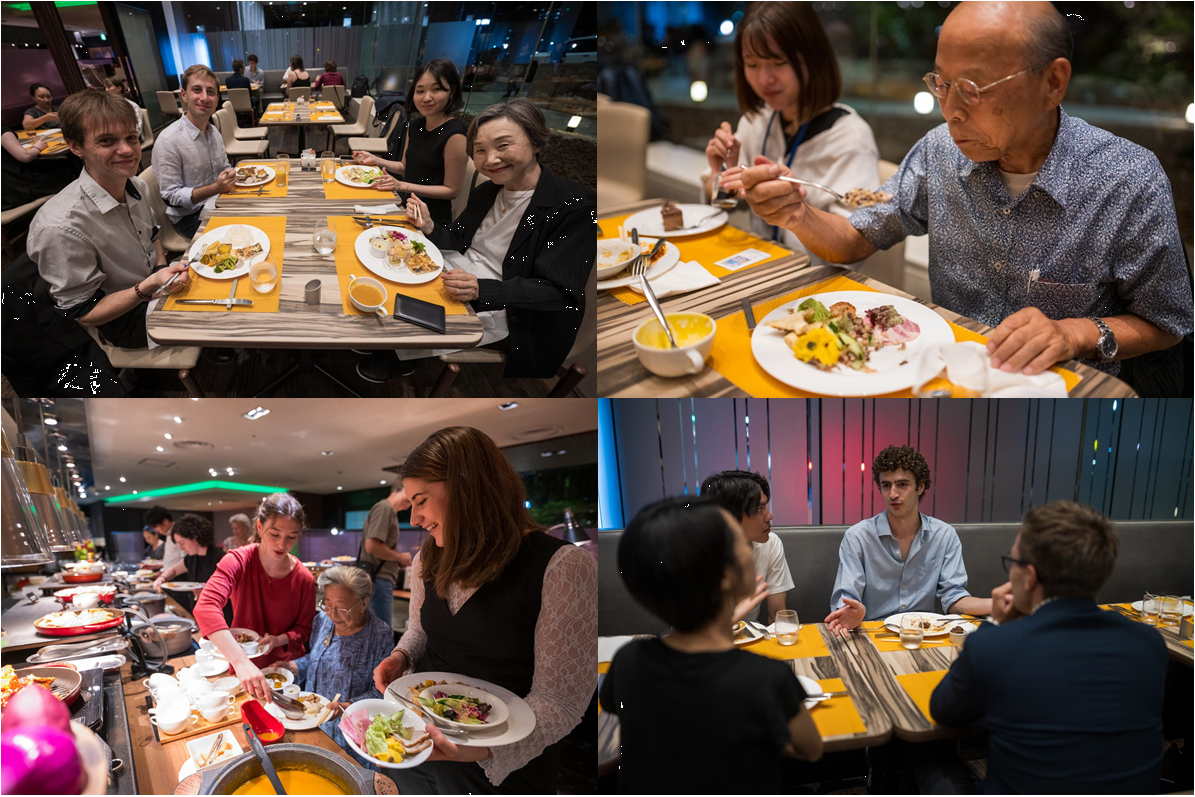 The scene from the welcome dinner
In the evening, a welcome dinner was held to welcome the participants who had gathered in Hiroshima and to promote friendship among them.
The dinner was attended by two hibakusha, Ms. Koko Kondo and Mr. Kazuhiko Futagawa, the latter of whom had served as a webinar lecturer. They spoke with participants about the realities of the atomic bombing and aspects of their daily lives.
Read more(Hiroshima Session day2) →