Research Results and
Recommendations for Download

Thursday, October 16—Day 3
○ Activities of Day 3
- Lecture: Session on Non-Japanese Hibakusha Lecturer: Mr. Shunsuke Taga
- Lecture: Session on Kinokokai (A-bomb microcephaly sufferers) Lecturer: Mr. Naomasa Hirao
- Lecture: Session on Nagasaki Lecturer: Mr. Mitsuhiro Hayashida
- Interaction with youth activists
The third day of the Hiroshima-ICAN Academy began with a lecture by Mr. Shunsuke Taga on non-Japanese hibakusha.
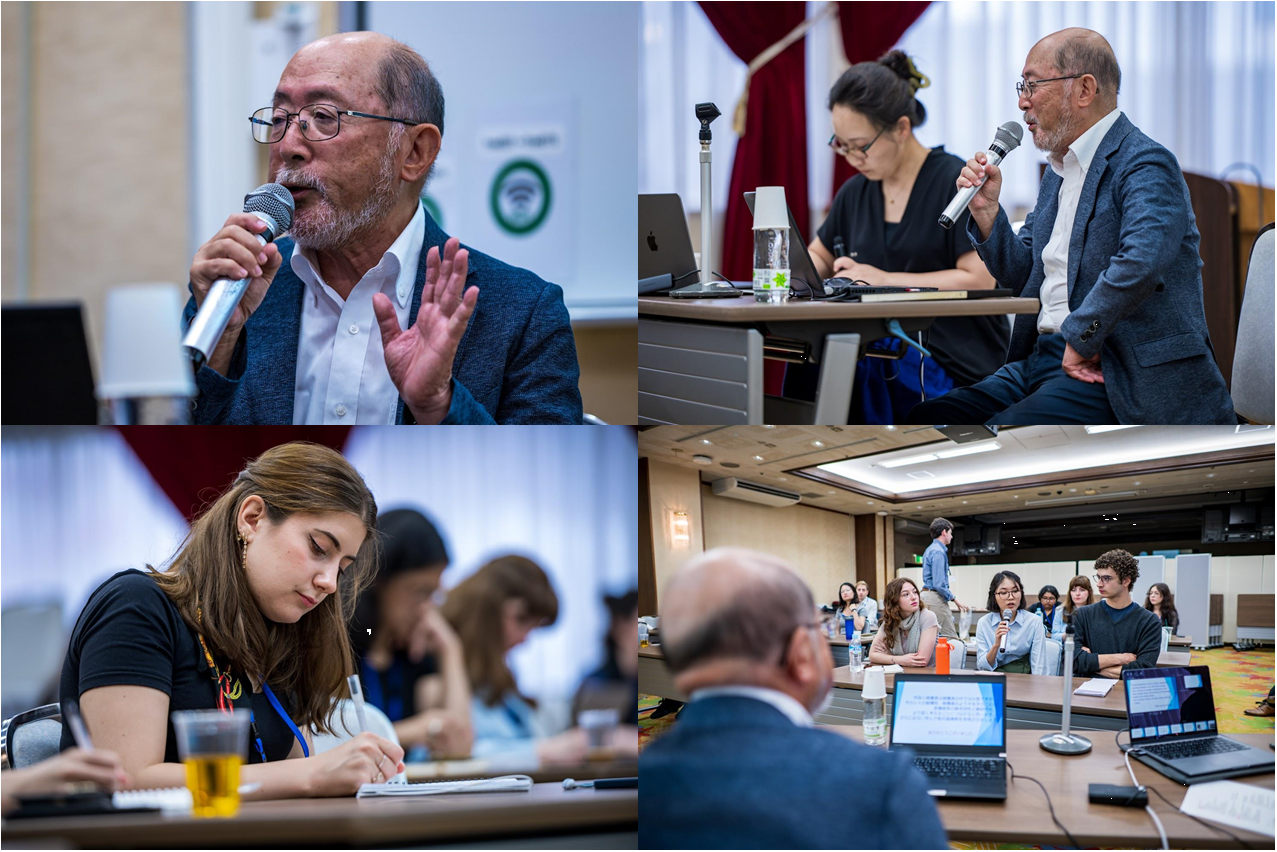 A lecture by Mr. Shunsuke Taga
He spoke about foreign nationals who had been brought to Hiroshima as prisoners of war and were exposed to the atomic bombing.
His talk described how they faced dual discrimination as hibakusha and as foreign nationals. He also explained that, because of the social circumstances of the time, including the international situation, many were forced to hide the fact that they had been exposed to the atomic bombing. As a result, they were not officially recognized as hibakusha and endured profound hardship.
One participant commented that they had not been aware that there were non‑Japanese hibakusha. They added that support and recognition for those affected by the bombing should not differ based on nationality or race and that the suffering experienced by these individuals should be widely known, just as that of Japanese hibakusha is.
In the afternoon, Mr. Naomasa Hirao, who heads the secretariat of Kinokokai, delivered a lecture on the organization’s activities and on atomic-bomb microcephaly—a condition caused by fetal exposure to radiation, characterized by a small head circumference and accompanied by intellectual and physical disabilities.
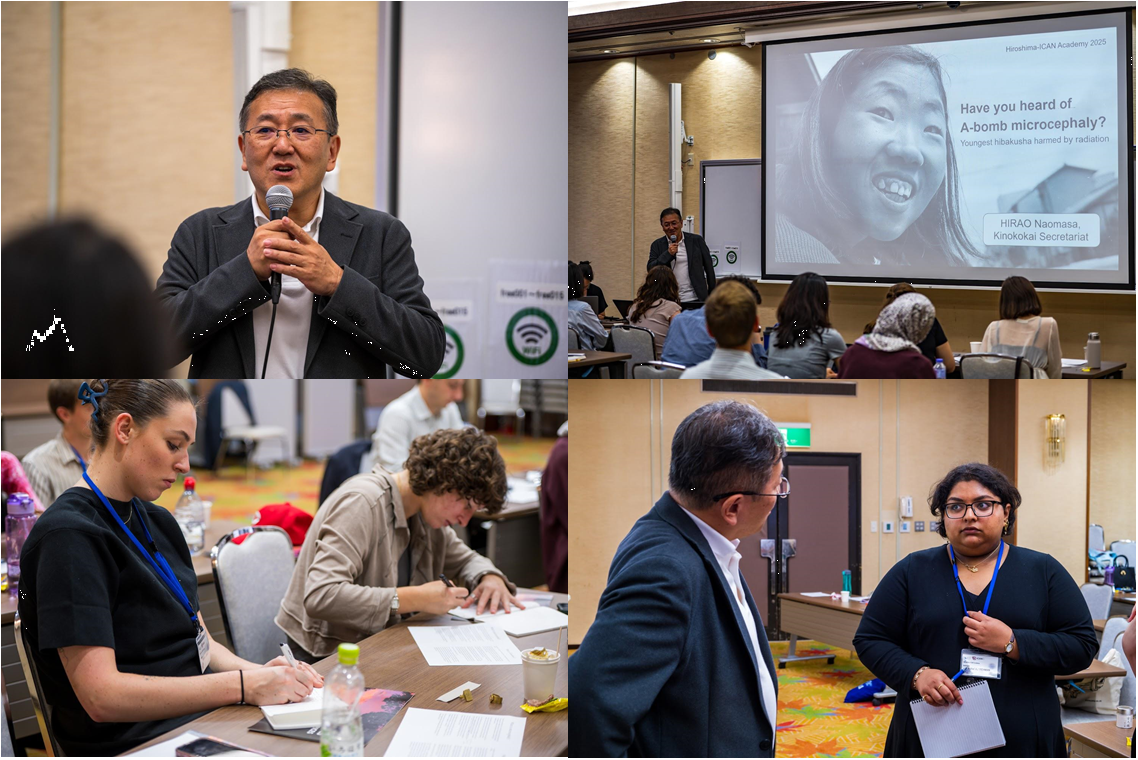 A lecture by Mr. Naomasa Hirao
He explained that, despite the serious physical effects, patients with atomic-bomb microcephaly were not widely known and were not recognized as hibakusha. He also shared accounts from in‑utero hibakusha who actually suffered from atomic-bomb microcephaly.
One participant reflected that learning how patients with atomic‑bomb microcephaly were treated helped them understand that the bombings have caused long‑term suffering for survivors, not only for those who lost their lives. They were especially struck by cases in which parents hid their children’s condition to avoid discrimination.
This was followed by a lecture from Mr. Mitsuhiro Hayashida of Peace Education Lab on the realities of the atomic bombing in Nagasaki and on hibaku taiken sha—individuals who experienced the atomic bombing but have not been officially recognized as hibakusha and are therefore ineligible for benefits and assistance.
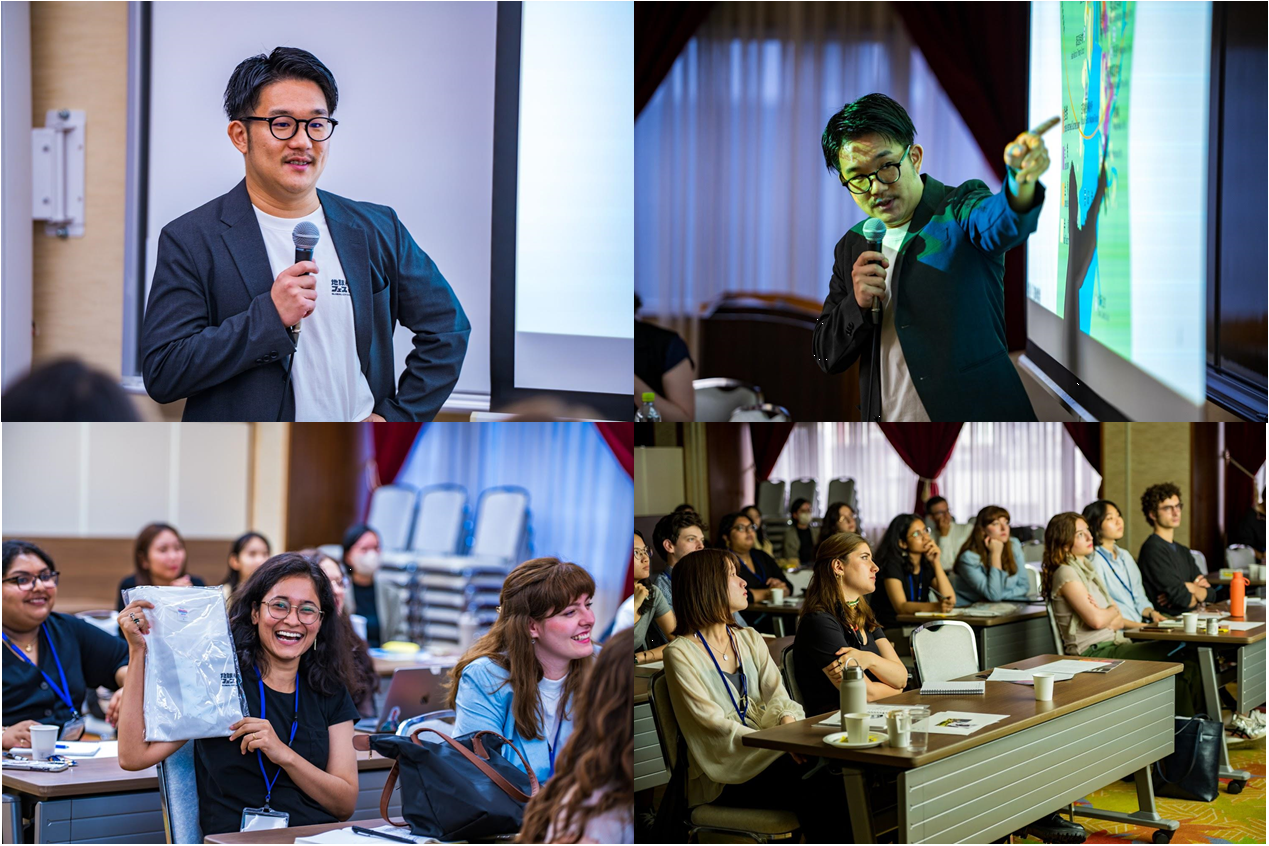 A lecture by Mr. Mitsuhiro Hayashida
He described the long-standing efforts of hibaku taiken sha to obtain official recognition. He noted that some, despite having suffered significant harm, have chosen not to seek such recognition in order to avoid discrimination. He also referred to the phrase “Hiroshima rages, Nagasaki prays,” discussing differences in post-bombing activities between Hiroshima and Nagasaki.
One participant remarked that hearing about those who experienced the bombing and have continued their activities over many years, despite limited benefits and assistance, gave them a sense of responsibility as members of civil society to take action, including active engagement with governments.
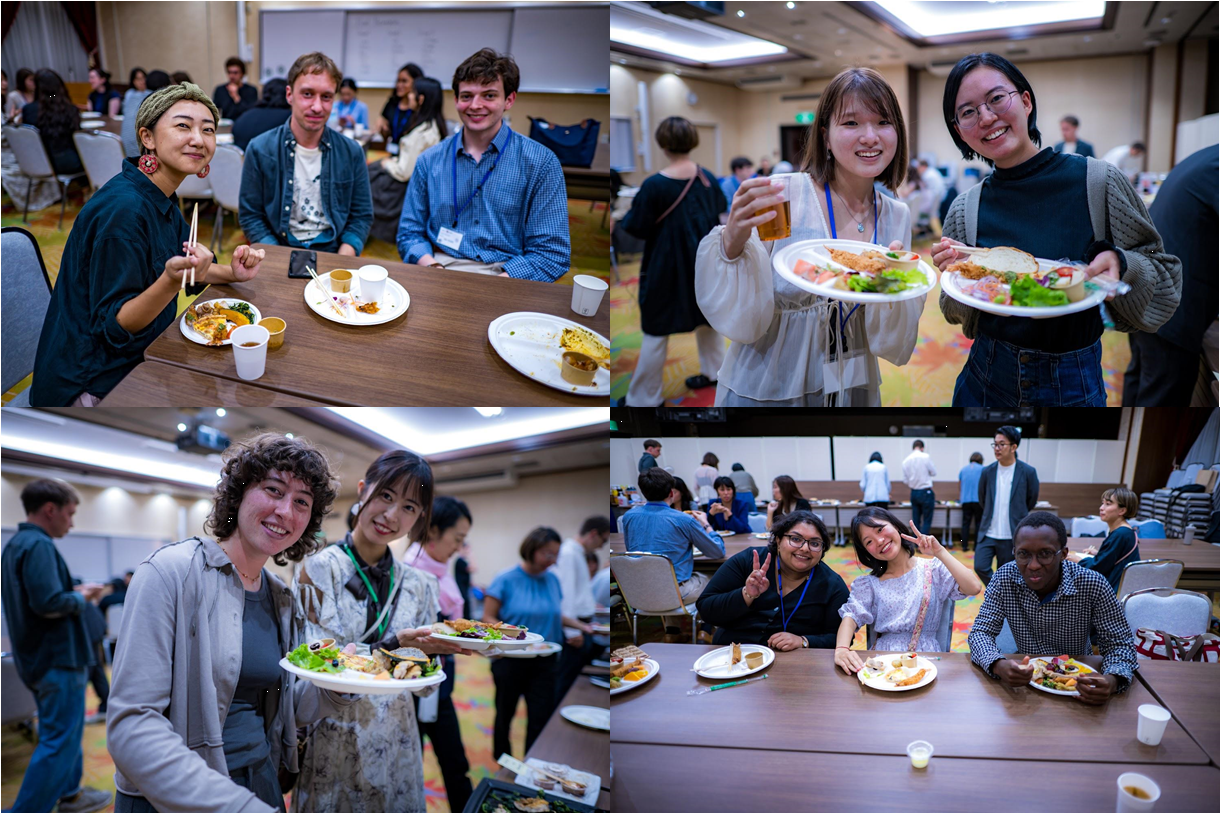 Interactions with Youth Activists
Afterward, Mr. Hayashida and youth activists in Hiroshima took part in an exchange session with the participants. The youth shared views on their respective activities and on issues related to nuclear weapons, making the session a valuable opportunity to motivate and encourage one another in their ongoing activities.
Read More(Hiroshima Session day4) →