Research Results and
Recommendations for Download


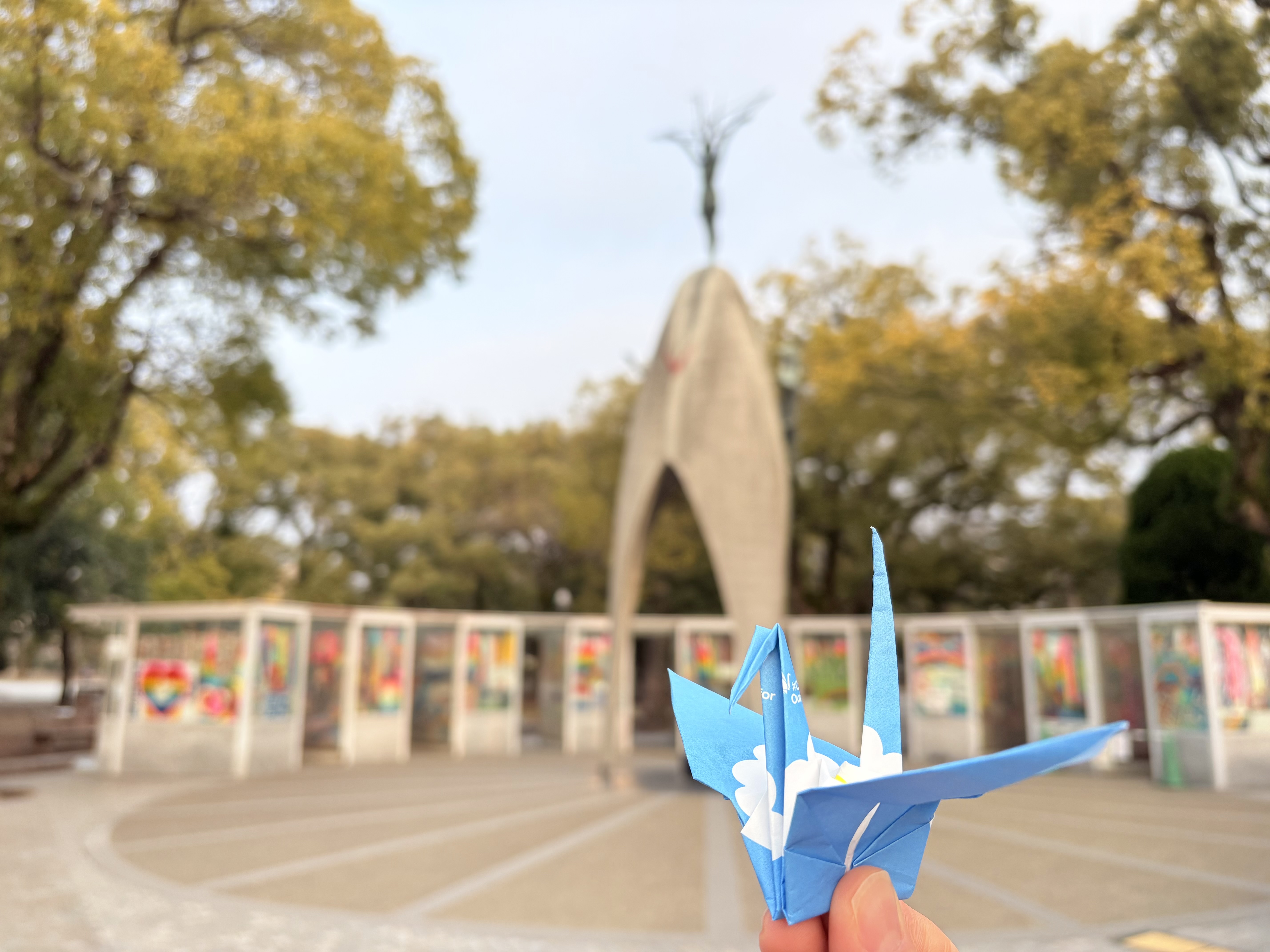
In Hiroshima Peace Memorial Park, there are numerous memorial monuments, one of which is the Children’s Peace Monument.
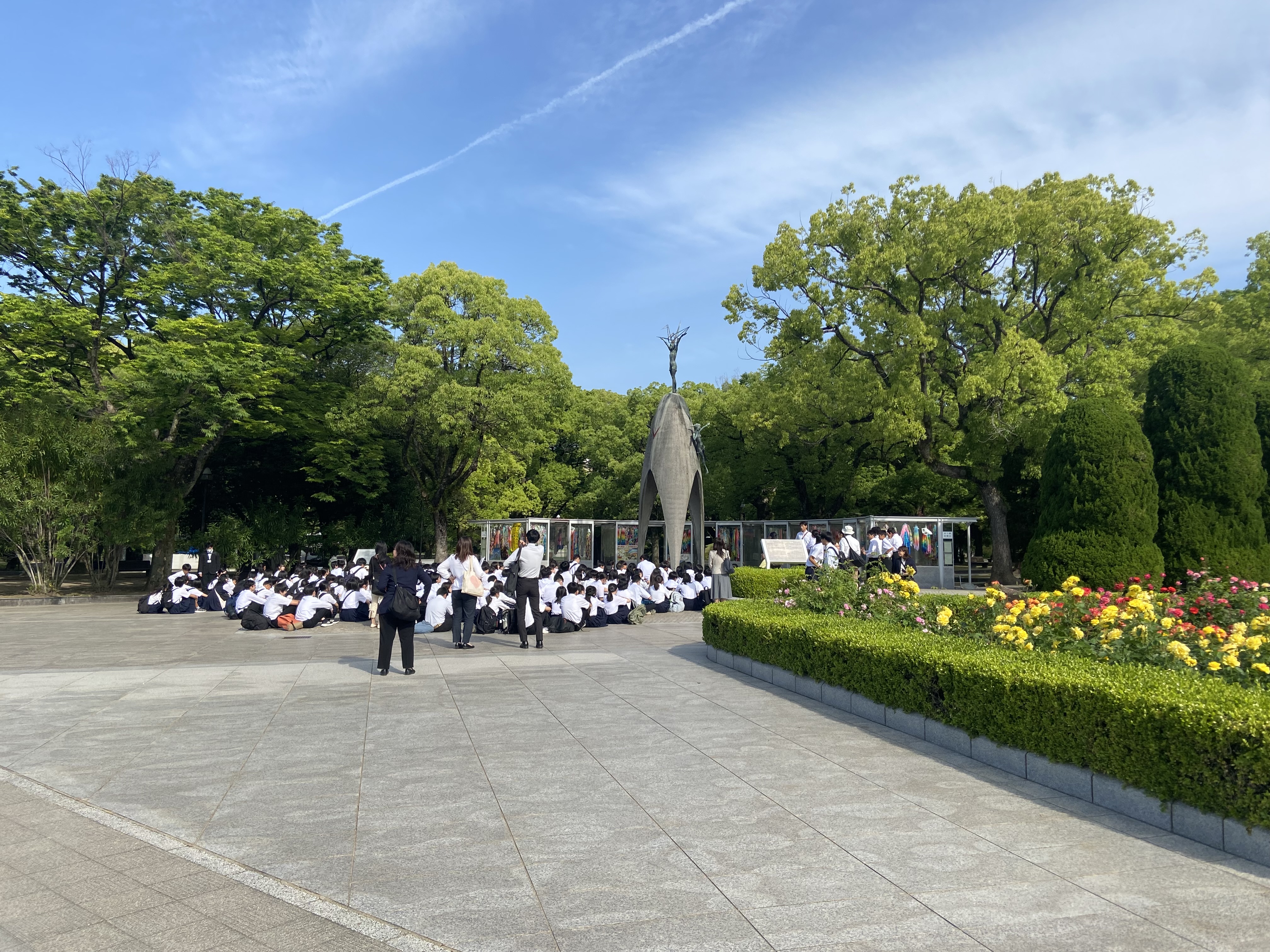
Many visitors from Japan and abroad, including students visiting Hiroshima on school trips, offer colorful paper cranes to the monument.
Juvenile atomic bomb victims
At 8:15 a.m. on August 6, 1945, an atomic bomb was dropped on Hiroshima.
It is estimated that approximately 350,000 people were in Hiroshima at the time, including residents, military personnel, and those who had entered the city for work or other purposes.
That day, 9,111 students were working to demolish buildings from the early morning due to wartime mobilization, resulting in an enormous loss of young people.
As a countermeasure against air raids, third- to sixth-year national school students (as old as present-day third- to sixth-year elementary school students) had been evacuated in groups.
Among the children who had been separated from their parents, many of them lost their families and their homes due to the atomic bombing, and they were faced with harsh realities even after the war.
Sadako Sasaki
The construction of the Children’s Peace Monument was inspired by Sadako Sasaki.
When the atomic bomb was dropped, Sadako, a two-year-old girl, was having breakfast with her family at home in Kusunoki-cho (in Nishi Ward, Hiroshima City), about 1.6 km from the hypocenter.
None of her family members were severely injured, and Sadako herself had no apparent injuries either, despite being blown away by the blast.
After the war, she entered Nobori-cho Elementary School (in Naka Ward, Hiroshima City).
She was a steady girl from a very young age and was so good at athletics that she served as the anchor for the relay race at the sports day when a sixth grader.
Sadako became ill when she was 12, 10 years after the atomic bombing.
Her exposure to the atomic bomb at two years of age was one of the causes leading to a diagnosis of lymphocytic leukemia, and she was hospitalized.
Even amid the arduous process of treatment through medications and blood transfusions, she fought the illness with all her might, never saying, “It hurts” or “It’s painful.”
After coming to know the legend that folding a thousand origami cranes enables one to fulfill their wish, she continued to fold paper cranes in her fervent wish to get better as soon as possible and continue to live.
Nevertheless, her wish was not fulfilled. After eight months of battling her illness, Sadako passed away on October 25, 1955, at the young age of 12.
Children’s campaign to construct the Children’s Peace Monument
After Sadako died, her classmates began a campaign to construct a memorial to mourn for her and all the other children who had died due to the atomic bombing.
Thanks to donations from all over Japan, the Children’s Peace Monument was completed on May 5, 1958, nearly three years after Sadako’s death.
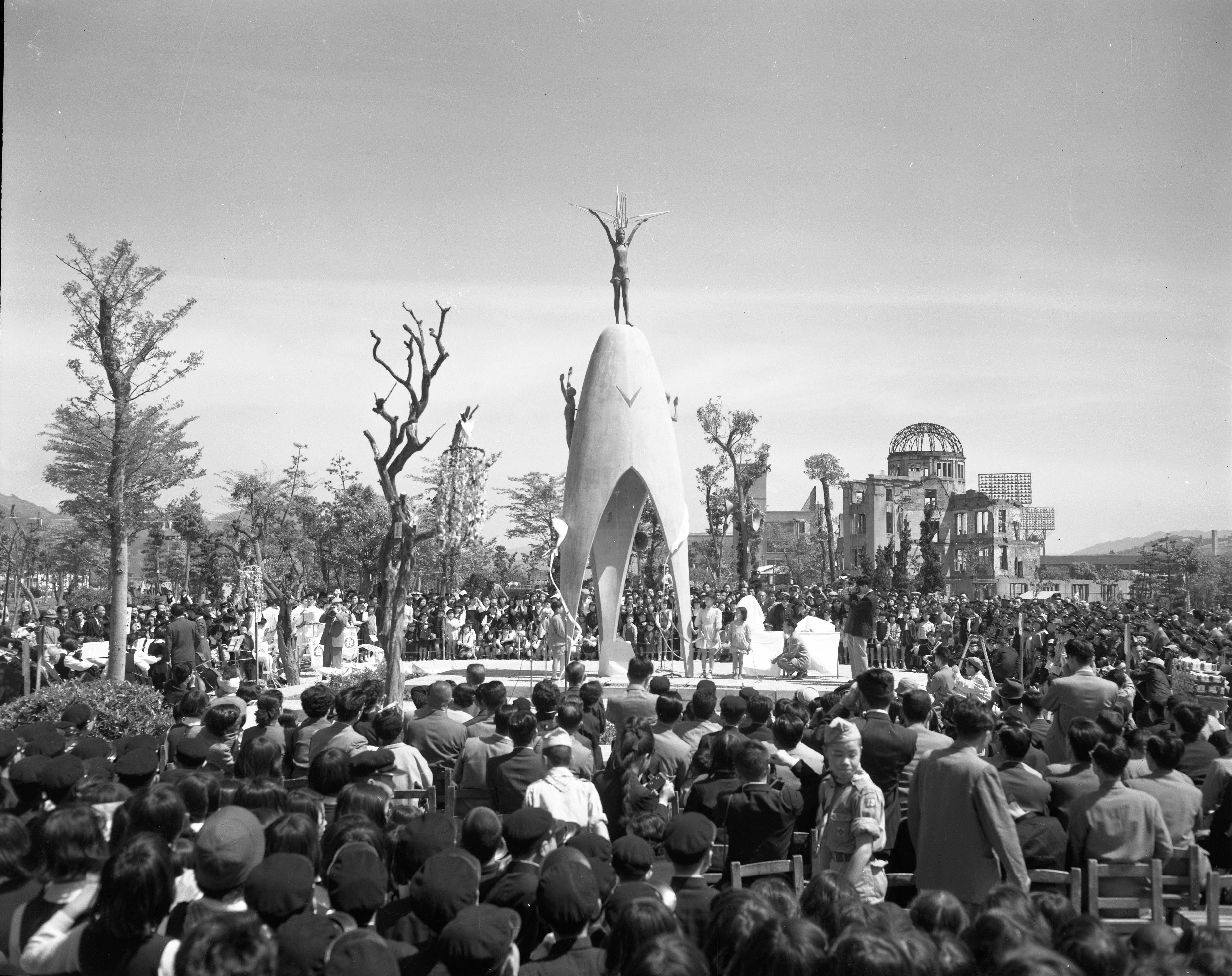 Unveiling of the Children’s Peace Monument (Courtesy of Hiroshima City Archives)
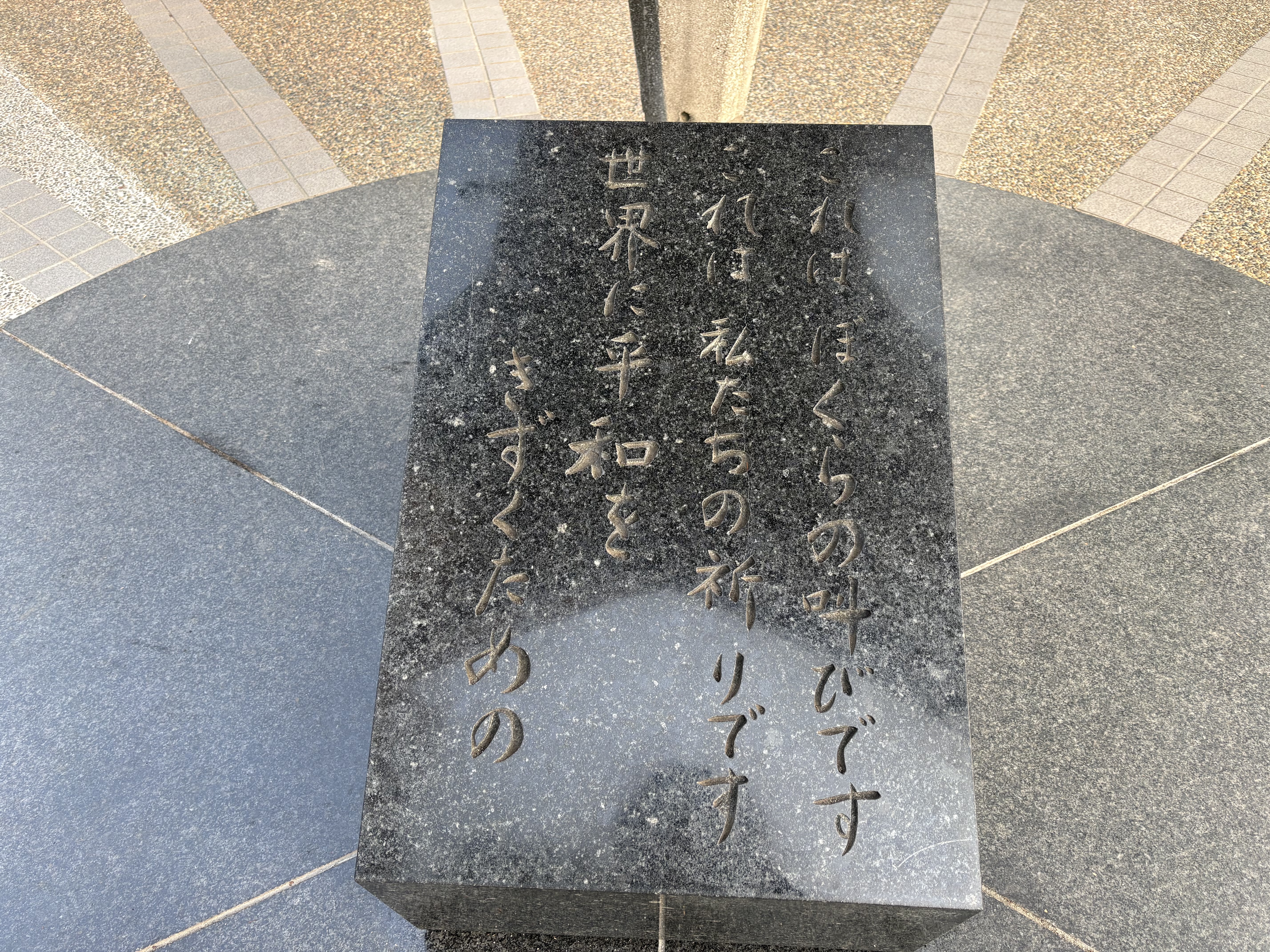
Beneath the Children’s Peace Monument is a stone plate inscribed as follows:
This is our cry.
This is our prayer.
For building peace in this world.
The story of Sadako’s classmates, who contributed to the construction of the monument is told in the manga The Story of the Children’s Peace Monument: The Friends of the Sixth Grade Bamboo Class.
Please take a look at the manga.
External link to:The Story of the Children’s Peace Monument: The Friends of the Sixth Grade Bamboo Class
Paper cranes as messengers of prayers for peace
The story of Sadako has spread all over the world and is still inspiring people both in Japan and abroad to fold paper cranes and offer them to the Children’s Peace Monument.
It is estimated that as many as 10 million paper cranes are offered every year.
Each of those paper cranes is sent as a messenger of prayers for peace from around the world to Hiroshima.
#Cranes for Our Future
Hiroshima Prefecture and the Hiroshima Organization for Global Peace (HOPe) run a social media campaign every year to call for people around the world to fold paper cranes in their wish for peace and to share the message of peace around the world, spreading support for the abolition of nuclear weapons.
For more details, click the link below.
#Cranes for Our Future