Research Results and
Recommendations for Download

From August 15 to 19, 2026, Hiroshima Prefecture and the Hiroshima Organization for Global Peace (HOPe) held the 2026 Hiroshima Global Youth Forum in Hiroshima.
The Forum builds on the experience and networks developed through ten editions of the Hiroshima Junior International Forum. Relaunched in 2026 with a stronger focus on the abolition of nuclear weapons, the program aims to help young people deepen their understanding of the realities of the atomic bombings and contemporary nuclear issues, engage in dialogue with people from different backgrounds, and consider how they can take action for peace.
This year, 84 high school students from 25 countries, including Japan, came together under the theme, “What We Can Do to Achieve a Peaceful World Free of Nuclear Weapons.” Through learning, first-hand experiences in Hiroshima, and intensive discussions with one another, the participants developed a shared message that became the 2026 Hiroshima Declaration.
Forum Overview
About applying Hiroshima Global Youth Forum
Organized by:
Hiroshima Prefecture and the Hiroshima Organization for Global Peace (HOPe)
Dates:
August 15–19, 2026
Venue:
International Conference Center Hiroshima and other locations
Theme:
What We Can Do to Achieve a Peaceful World Free of Nuclear Weapons
Participants:
84 high school students
Japanese students: 48
International students: 36 from 24 countries
The international participants represented Armenia, Brazil, Chile, Costa Rica, Egypt, Finland, France, Germany, Italy, Kazakhstan, Maldives, Mexico, New Zealand, Nigeria, the Philippines, Romania, Serbia, Slovenia, South Korea, Switzerland, Thailand, the United Kingdom, the United States, and Zambia.
Event Report
Learning Began Before the Participants Arrived in Hiroshima
The Forum began well before the five-day program in Hiroshima.
From May through July, participants exchanged views on peace and nuclear weapons through online discussion boards in Japanese and English. Online learning sessions on nuclear abolition were also held in July. These activities helped participants develop a common foundation of knowledge and become familiar with some of the major issues surrounding nuclear weapons before meeting for the in-person program.
Five Days in Hiroshima
・August 15 — Visit to Miyajima
The Forum began with a visit to Miyajima. Participants from different countries and backgrounds spent the day together before beginning the main learning and discussion sessions in Hiroshima.
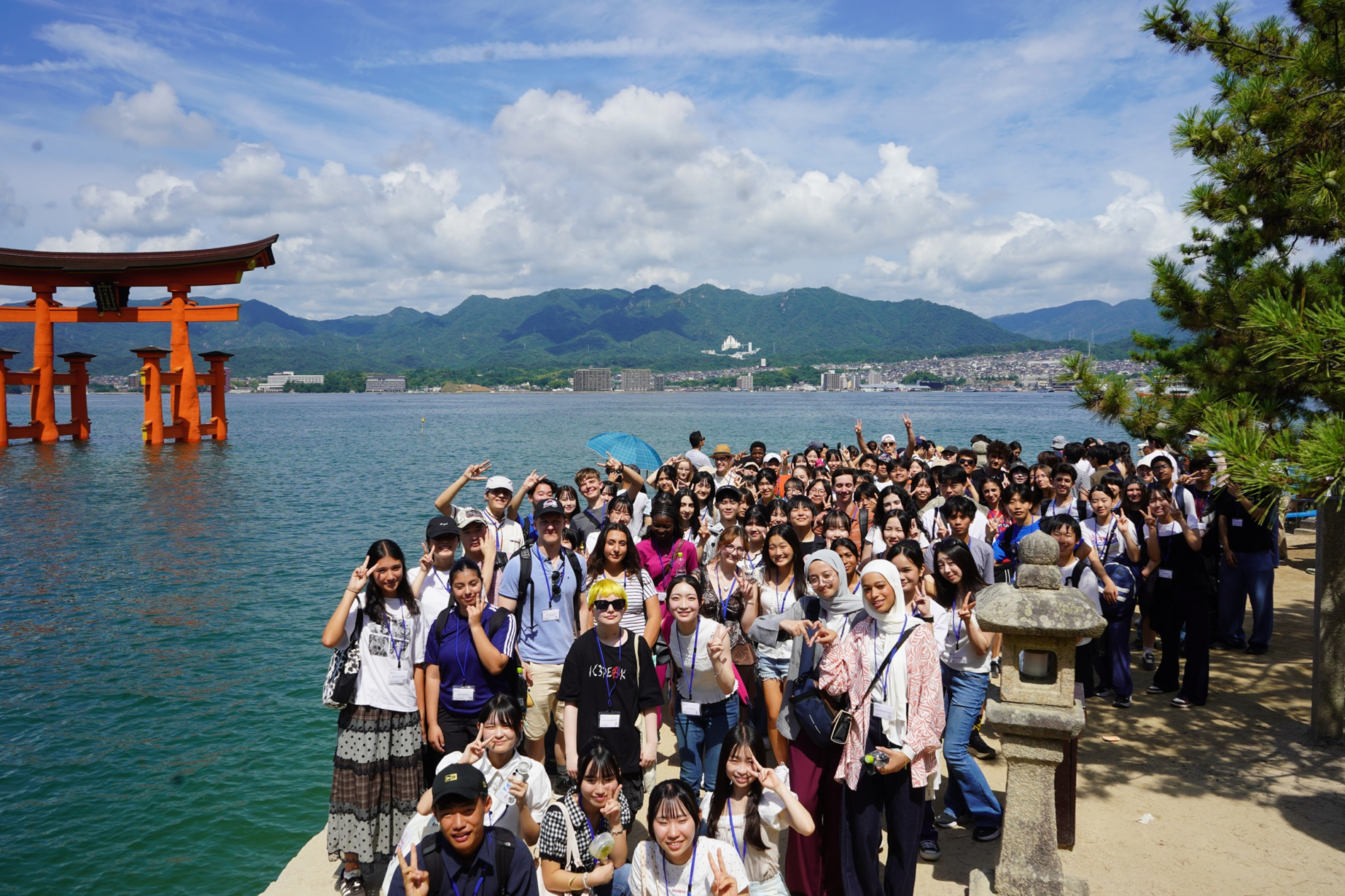 Visit to Miyajima
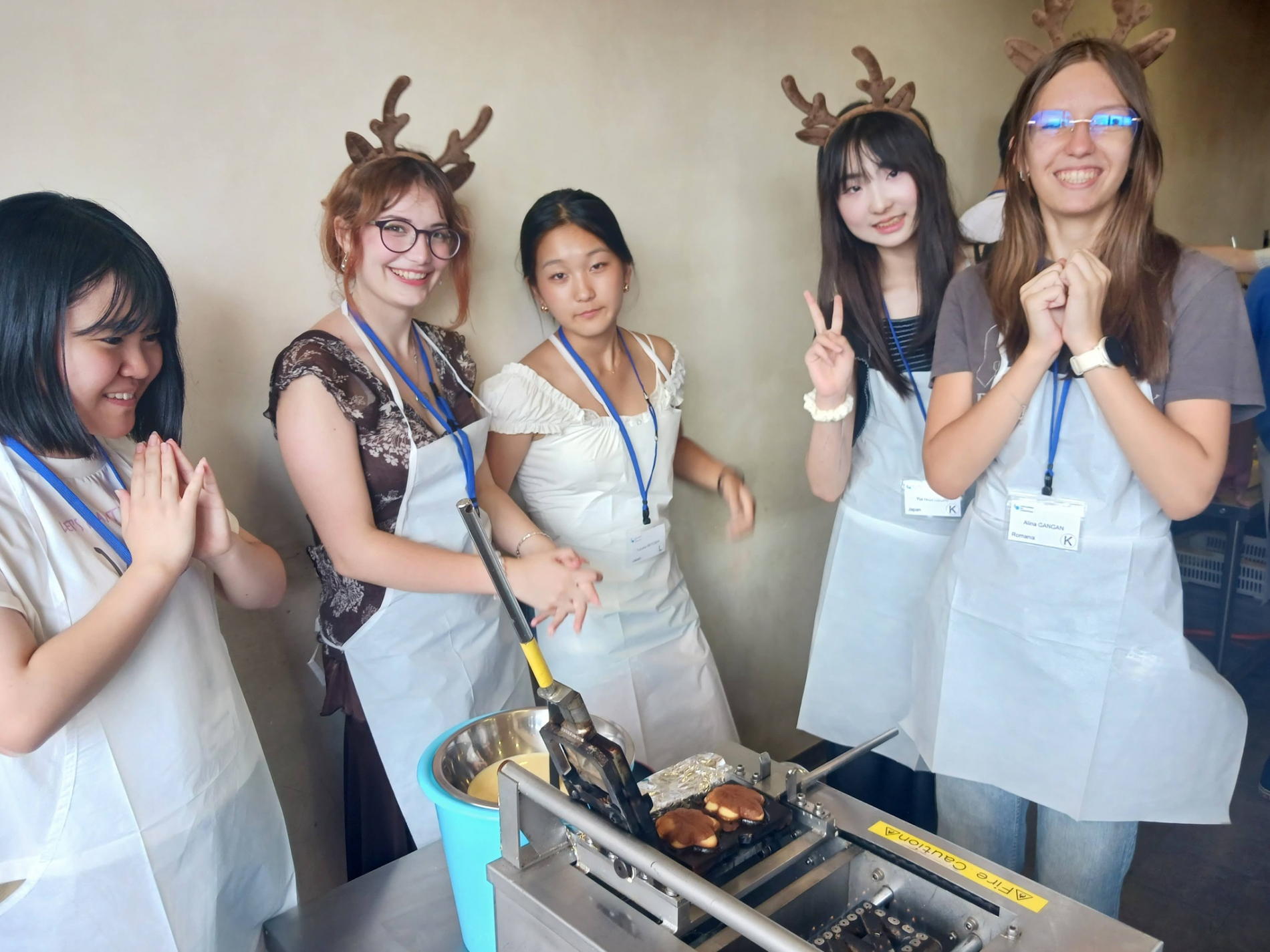 Make Momiji Manju
・August 16 — Learning from Hiroshima
Following the opening session and orientation, Chisa Mikami, Head of the UNITAR Hiroshima Office, delivered the keynote speech.
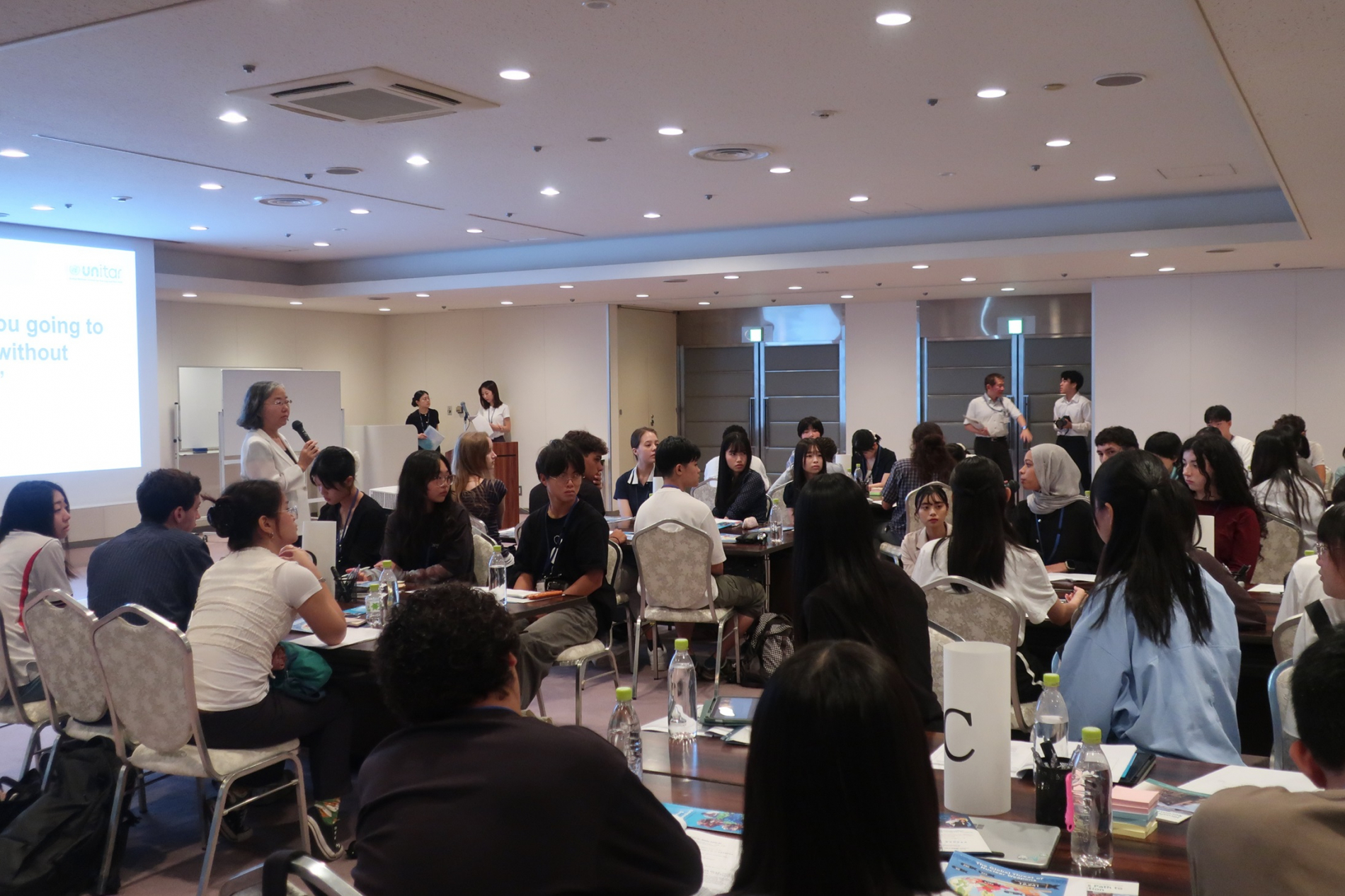 Keynote speech
Participants then visited the Hiroshima Peace Memorial Museum and heard testimony from hibakusha Keiko Ogura. They also visited Hiroshima Peace Memorial Park and paid their respects at the cenotaph. Through testimonies, historical materials, and the places that preserve the memory of the atomic bombing, participants reflected on the human consequences of nuclear weapons and the meaning of peace.
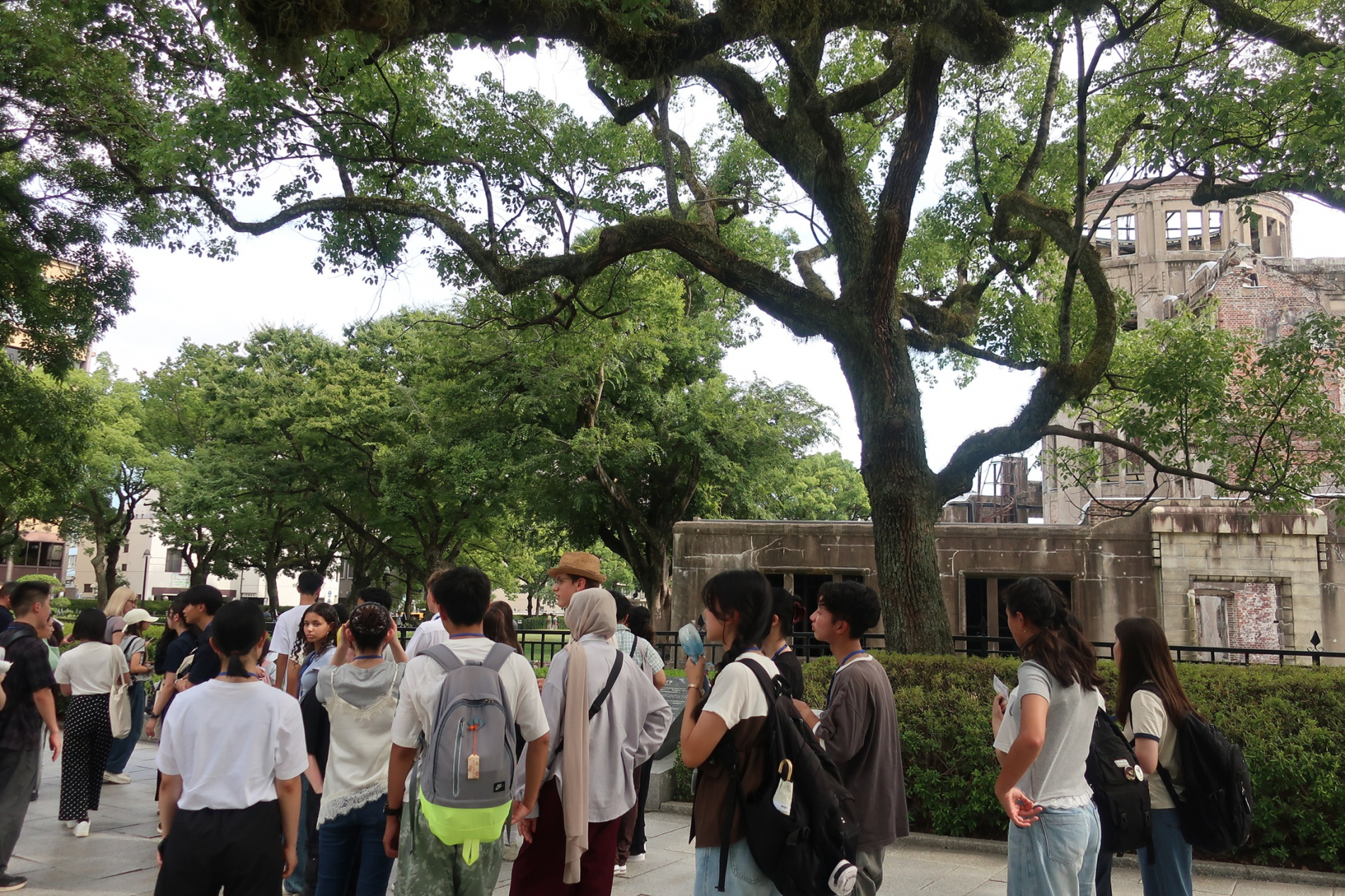 Hiroshima Peace Memorial Park
・August 17–18 — Turning Dialogue into the Hiroshima Declaration
Over the next two days, participants worked in groups to discuss the challenges to achieving a world free of nuclear weapons and what governments, society, Hiroshima, and young people themselves can do.
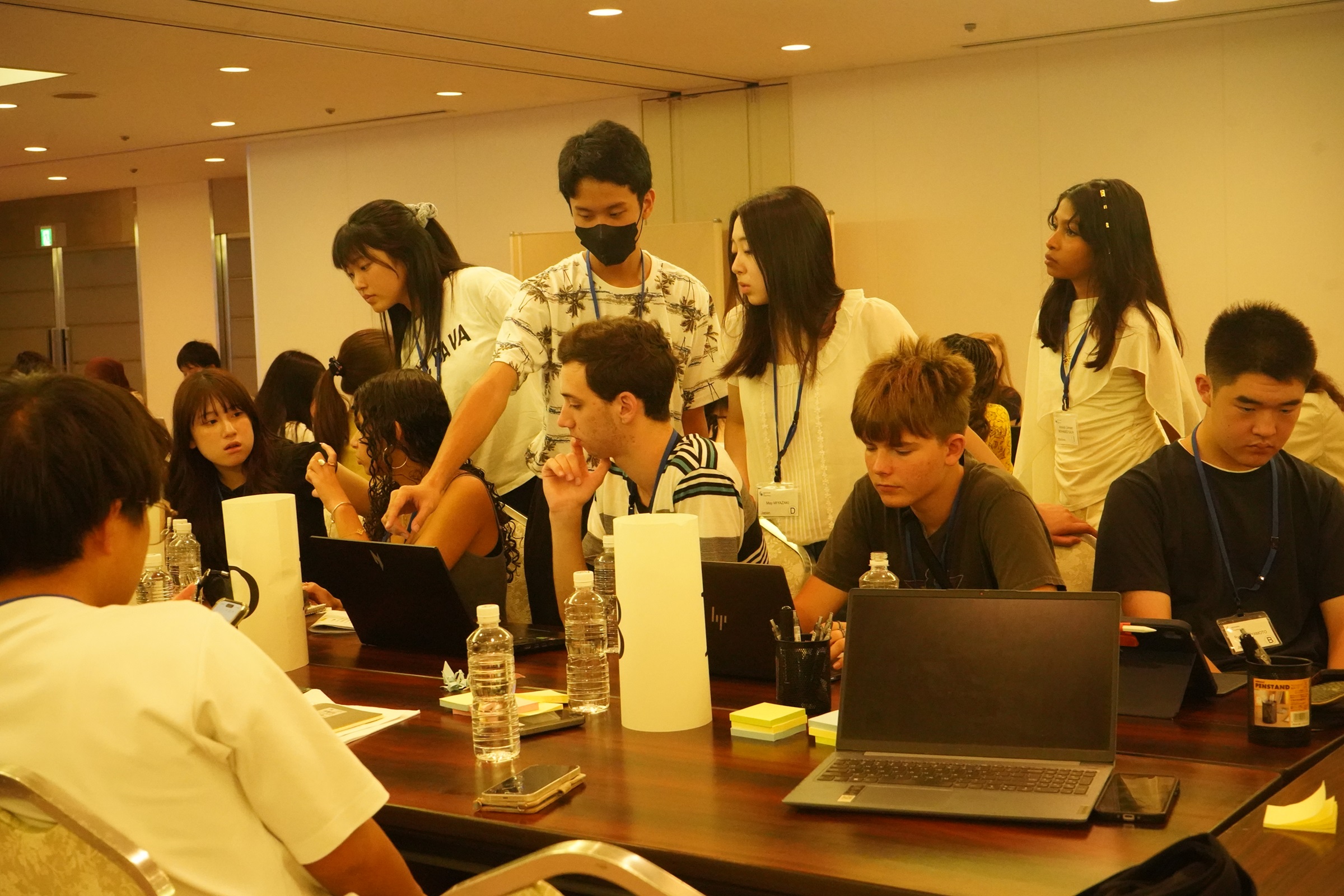 Group discussion
The students came from different cultures and experiences and did not always begin from the same perspective. By listening to one another, exchanging ideas, and working through their differences, they gradually developed a shared message. A draft of the Hiroshima Declaration was prepared on August 17 and finalized following further discussions on August 18.
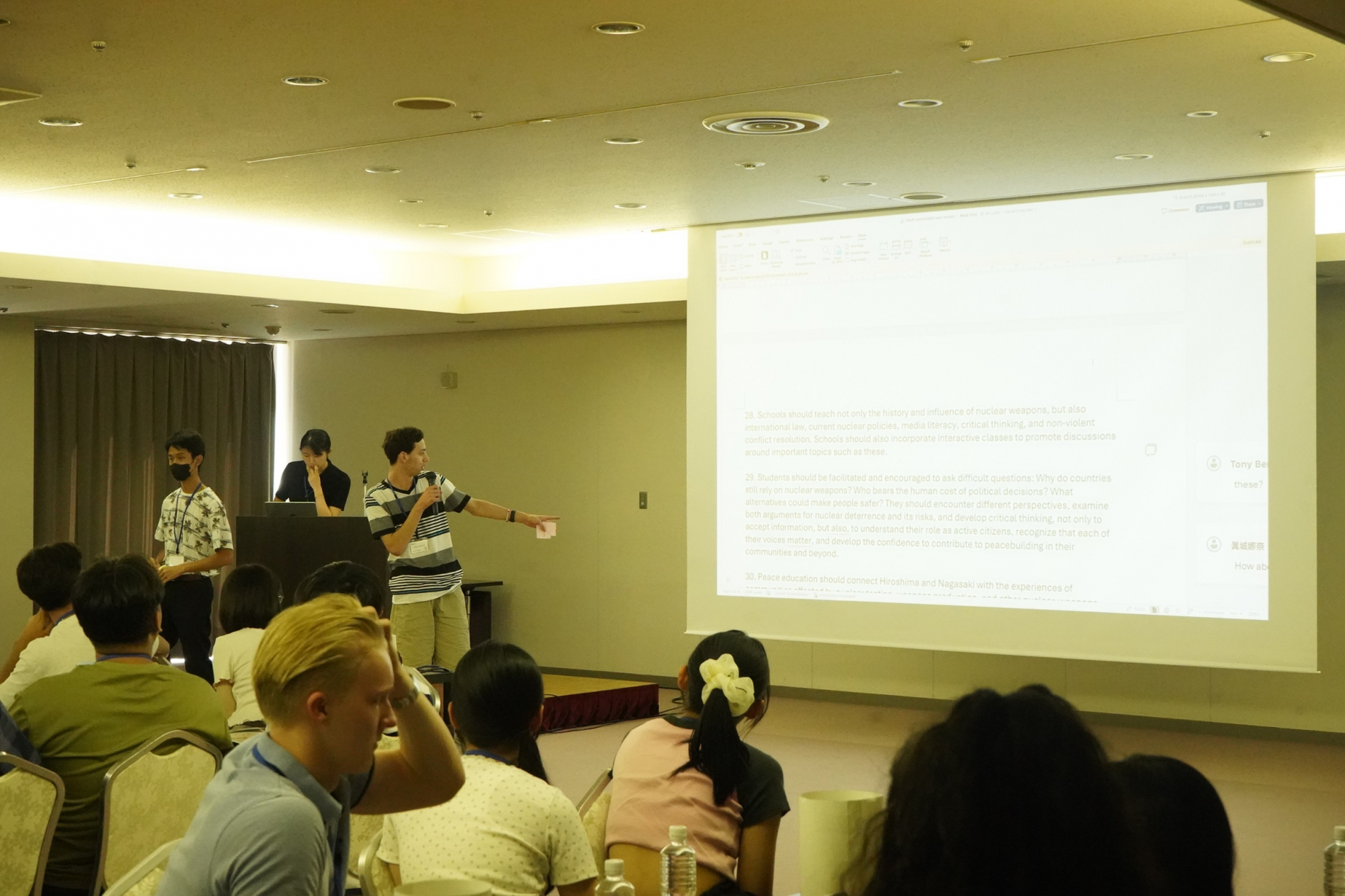 Group presentation
・August 19 — Sending a Message from Hiroshima to the World
At the final presentation session, student representatives presented the completed Hiroshima Declaration and formally handed it to the Governor of Hiroshima Prefecture.
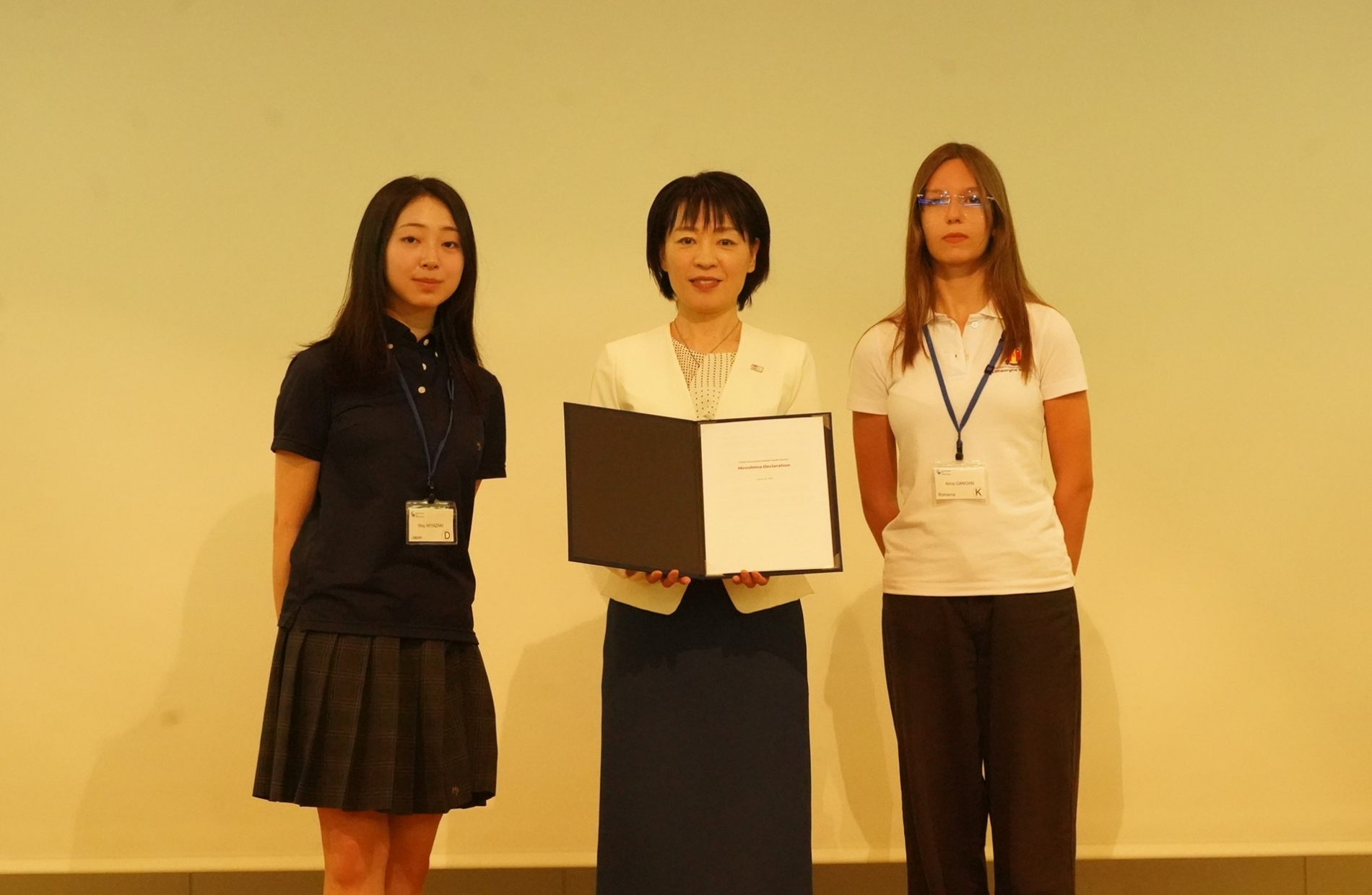 Delivery of the Hiroshima Declaration to the Governor of Hiroshima Prefecture
Participants also presented their action plans and reflections on the Forum. They were appointed Hiroshima Global Youth Forum Ambassadors, marking the beginning of the next stage of their activities beyond the Forum itself.
The Hiroshima Declaration: A Message from 84 Young People
The Hiroshima Declaration represents the culmination of the participants’ five days of learning and dialogue.
It addresses the challenges to nuclear abolition, recommendations for global action, the role of Hiroshima, the commitments of the young generation, and a message to the world. It calls for dialogue and cooperation, fair and verifiable disarmament, peace education connected to present-day issues, and greater participation by young people in shaping the future.
The Declaration also stresses that knowledge should lead to responsibility and action. The participants affirm that young people already have the ability to learn, speak, connect, create, and act—and that they have a responsibility to use those abilities.
It concludes with a simple but powerful message:
“We choose peace. We choose dialogue. We choose human dignity. Our single voice can make a change, and our combined voice can shape the future.”
Link to the 2026 Hiroshima Declaration (PDFファイル)(192KB)
From Learning in Hiroshima to Action Around the World
During the Forum, participants learned about the realities of the atomic bombing and contemporary nuclear issues, while engaging in dialogue with people whose experiences and perspectives differed from their own.
The experience encouraged them to see nuclear weapons not simply as a distant international issue, but as something connected to their own lives and choices. The Forum also provided a foundation for participants to continue sharing what they learned with their schools and communities and to turn their experience in Hiroshima into sustained action.
The 84 participants are now taking the connections, questions, and commitments formed in Hiroshima back to their own communities. Hiroshima Prefecture and HOPe will continue to support young people as they turn dialogue into action for peace.